
ZZ Plant
The ZZ plant is a popular indoor plant / house plant. It is admired for its glossy foliage, attractive upright growth, ability to tolerate a variety of indoor conditions and remarkable ability to tolerate periods of neglect because it is an easy-care plant. It can thrive in low light and requires little watering because it stores water and can survive extended periods without watering, making it an excellent choice for beginners and busy plant lovers. The ZZ plant is a simple and stylish way to bring a touch of nature into your home or office.
Botanical name / Scientific name of ZZ Plant is (Zamioculcas zamiifolia)
The ZZ plant belongs to the Araceae (arum) family, the same botanical family that includes plants such as Pothos, Peace Lilies, Philodendrons, and Anthuriums.
A typical ZZ plant has smooth, glossy, oval-shaped leaflets arranged along upright stems. Mature plants can develop a full, attractive appearance and may grow several feet tall when given suitable conditions. New shoots are often lighter green and gradually become darker as they mature.
It’s slow to moderate growth rate also makes it suitable for homes, offices, bedrooms, and other indoor spaces where a low-maintenance plant is desired.
With appropriate light, careful watering, good drainage, and occasional maintenance, a ZZ plant can remain attractive and healthy for many years.
Benefits of ZZ Plant:
- Easy to care for: The ZZ plant requires very low maintenance, making it ideal for beginners and busy people.
- Needs little water: Its thick stems store water, so ZZ plant can handle occasional missed waterings and changes in indoor conditions.
- Tolerates low-light conditions: It can grow well in low-light indoor spaces, although moderate indirect light is generally better for ZZ Plant.
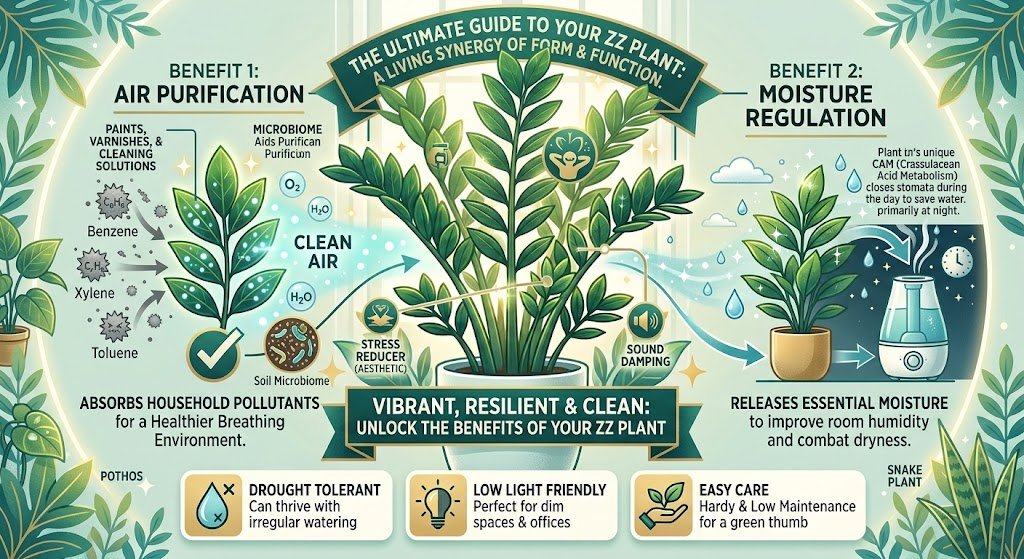
- Air purification: ZZ plants can absorb certain floating air compounds and helps to improve indoor air quality.
- Adds a little moisture: Like other plants, ZZ plants release some water vapors through transpiration, although the effect from a single houseplant is usually quite small.
- Attractive appearance: Its attractive, glossy foliage adds a decorative, refreshing, relaxing and nature inspired touch to homes and offices.
- Slow growth: It usually doesn’t require frequent pruning or repotting.
- Long-lasting: With proper care, ZZ plants can live for many years indoors.
ZZ Plant Care:
ZZ plant is one of the easiest house plants to care for. All the forms / types of ZZ plant require almost same care.
- Light: Bright, indirect light is ideal for ZZ Plant. It can tolerate low light conditions, but its growth will be slower. Avoid harsh direct afternoon sunlight.
- Watering: Water ZZ Plant when the soil is dried out completely. Water thoroughly and let excess drain away. Do not Overwater it. If the leaves turn yellow, it means you are overwatering it.
- Soil: Use a well-draining potting mix ideally one designed for succulents or cactus.
- Temperature: Temperature around 18-30°C is ideal for ZZ plant. Keep it away from cold drafts and temperatures below about 10°C (50°F).
- Humidity: Normal indoor humidity is perfectly fine For ZZ plant; there is no requirement of misting.
- Fertilizer: Feed lightly with a balanced houseplant fertilizer about once every 2–3 months during active growth. Do not overfertilize it.
- Pruning: Remove yellow or damaged leaves/stems at the base with clean scissors.
- Repotting: Usually every 2–3 years, or when the rhizomes have filled the pot.
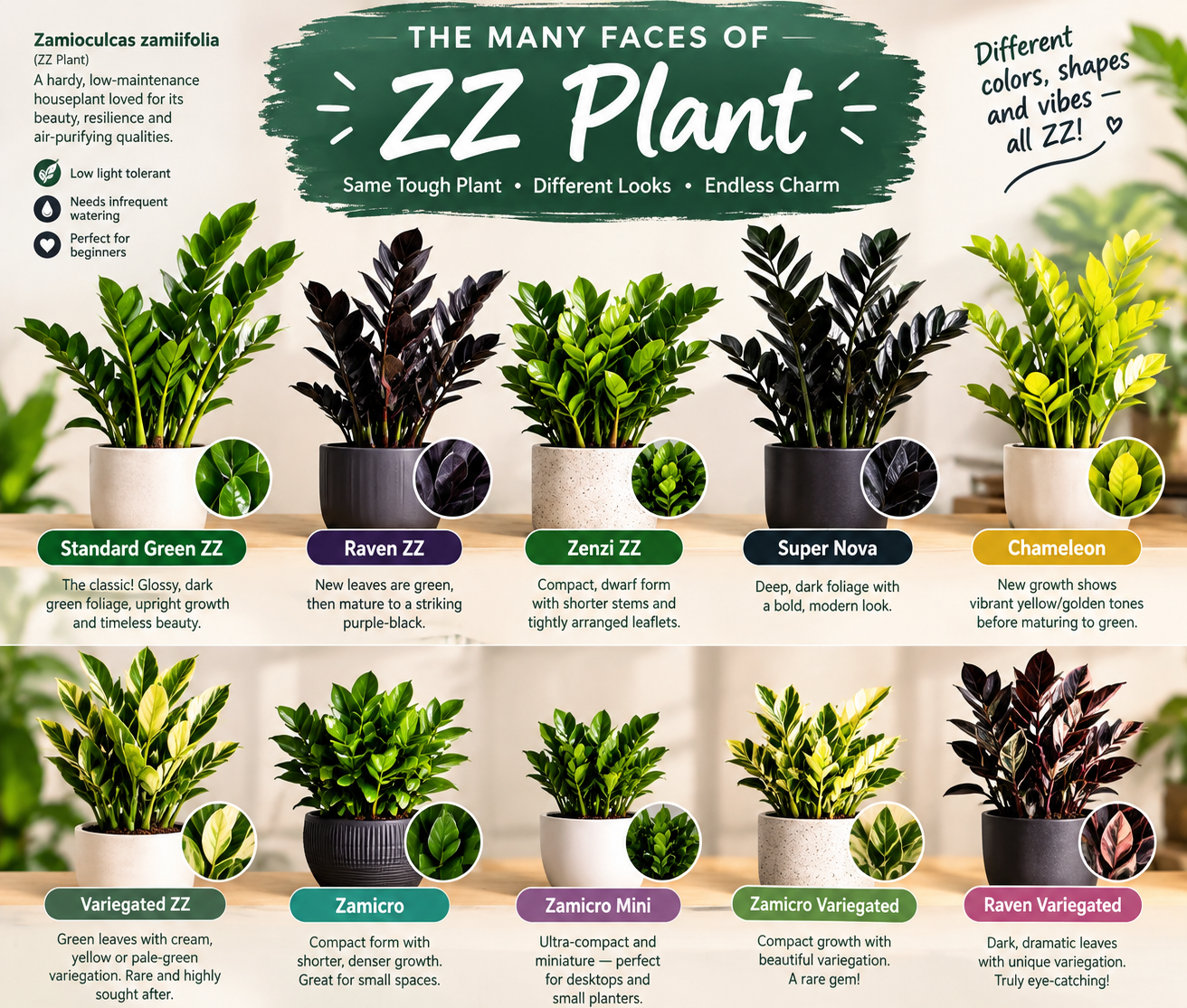
Types of ZZ Plant:
- Green ZZ Plant (Zamioculcas zamiifolia).
- Raven ZZ Plant / Black ZZ Plant (Zamioculcas zamiifolia ‘Raven’).
Raven Variegated ZZ plant / Black Variegated ZZ Plant (Zamioculcas zamiifolia ‘Raven Variegated’). - Zenzi ZZ Plant (Zamioculcas zamiifolia ‘Zenzi’).
- Supernova ZZ Plant (Zamioculcas zamiifolia ‘Supernova’).
- Variegated ZZ Plant (Zamioculcas zamiifolia ‘Variegata’).
- Chameleon ZZ Plant (Zamioculcas zamiifolia ‘Chameleon’).
- Zamicro ZZ Plant (Zamioculcas zamiifolia ‘Zamicro’).
Zamicro Mini ZZ Plant (Zamioculcas zamiifolia ‘Zamicro mini’).
Zamicro Variegated ZZ Plant (Zamioculcas zamiifolia ‘Zamicro Variegated’).
Green ZZ Plant:
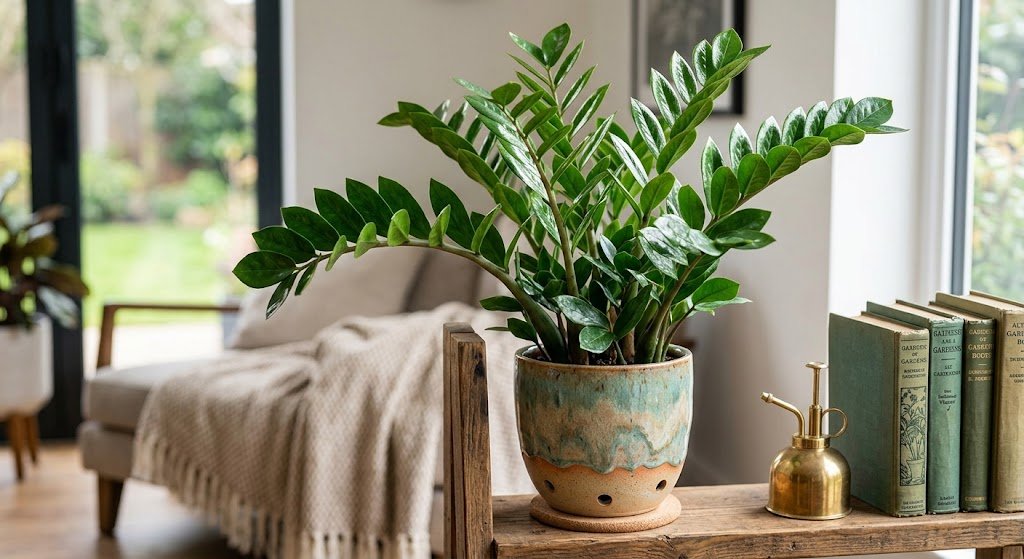
The Green ZZ Plant is a very popular, low-maintenance houseplant known for its glossy green leaves and attractive upright growth. Native to Eastern Africa, it stores water in underground stems which helps it to tolerate periods of drought and neglect. It can thrive in bright, indirect light and can also adapt to low-light spaces. It’s a useful choice for homes and offices. With nominal care, the ZZ Plant stays lush and attractive, making it an excellent choice for both beginners and experienced plant lovers.
Botanical name / Scientific name of Green ZZ Plant is (Zamioculcas zamiifolia).
Green ZZ Plant care:
All the types / forms of ZZ Plant require the same care.
- Light: Bright, indirect light is ideal for Green ZZ plant. It can tolerate low light conditions, but its growth will be slower. Avoid harsh direct afternoon sunlight.
- Watering: Water Green ZZ plant when the soil is dried out completely. Water thoroughly and let excess drain away. Do not Overwater it. If the leaves turn yellow, it means you are overwatering it.
- Soil: Use a well-draining potting mix ideally one designed for succulents or cactus.
- Temperature: Temperature around 18-30°C is ideal for Green ZZ plant. Keep it away from cold drafts and temperatures below about 10°C (50°F).
- Humidity: Normal indoor humidity is perfectly fine For Green ZZ plant; there is no requirement of misting.
- Fertilizer: Feed lightly with a balanced houseplant fertilizer about once every 2–3 months during active growth. Do not overfertilize it.
- Pruning: Remove yellow or damaged leaves/stems at the base with clean scissors.
- Repotting: Usually every 2–3 years, or when the rhizomes have filled the pot.
Is Green ZZ Plant toxic to cats and dogs?
Yes, the Green ZZ plant is toxic to cats and dogs if it is chewed or eaten / swallowed.
The Green ZZ Plant contains tiny, needle-like crystals called insoluble calcium oxalates. When a cat or dog bites the leaves or stems, these crystals can cause painful irritation in the mouth and digestive tract.
Possible Symptoms: Drooling, pawing at the mouth, retching, vomiting, diarrhea, and difficulty swallowing. In some rare cases, significant swelling in the mouth or throat can cause breathing difficulties.
If your cat or dog eats Green ZZ Plant: The Green ZZ plant exposure is usually not life-threatening, and many cases result in temporary irritation rather than serious poisoning. If the pets that develop severe swelling, repeated vomiting, difficulty swallowing, or trouble breathing, contact your veterinarian.
Raven ZZ Plant / Black ZZ Plant:
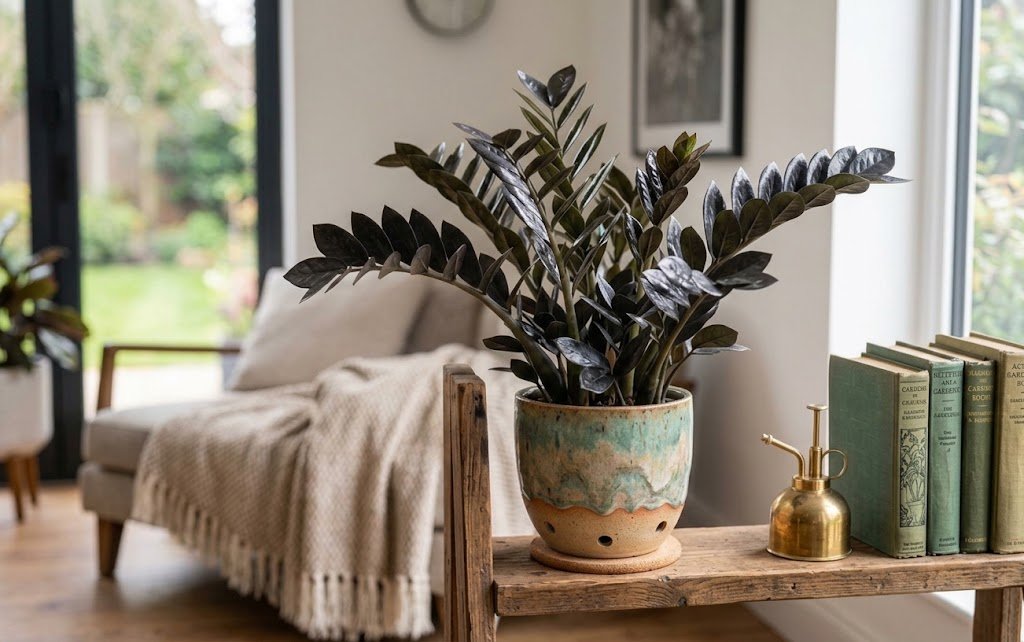
Raven ZZ Plant / Black ZZ Plant, a striking indoor plant / house plant loved for its glossy foliage that gradually changes from bright green to deep, almost black-purple as it matures. Native to Eastern Africa, this plant stores water in underground roots, making it highly tolerant of dry conditions and occasional neglect. It adapts well to indoor spaces and different light levels, though bright, indirect light helps maintain healthy growth. With its dramatic color and easygoing nature, the Raven ZZ plant / Black ZZ plant is a stylish choice for both beginners and experienced plant lovers.
Botanical name / Scientific name of Raven ZZ Plant is (Zamioculcas zamiifolia ‘Raven’).
There is another form of Raven ZZ plant known as (Raven variegated ZZ plant).
Raven Variegated ZZ Plant / Black Variegated ZZ Plant:
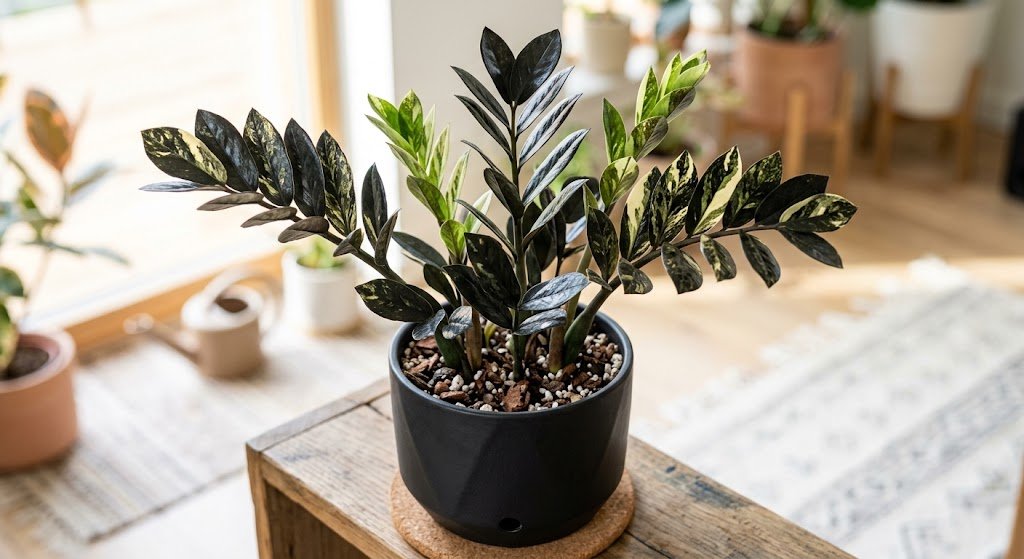
Raven Variegated ZZ Plant / Black variegated ZZ Plant is a striking and comparatively rare house plant valued for its glossy foliage, dramatic dark tones, and unique variegation. As the leaves mature, they can develop deep green to near-black coloring accented with creamy or yellowish patterns, making a bold contrast. Like other ZZ Plants, it grows from water-storing underground rhizomes, which makes it drought-tolerant and low-maintenance. Its distinctive appearance and easygoing nature make it a standout choice for indoor plant / house-plant collections and modern spaces.
Botanical name / Scientific name of Raven Variegated ZZ Plant is (Zamioculcas zamiifolia ‘Raven Variegated’).
Raven ZZ Plant / Black ZZ Plant care:
All the types / forms of ZZ Plant require the same care.
- Light: Bright, indirect light is ideal for Raven ZZ plant / Black ZZ plant. It can tolerate low light conditions, but its growth will be slower. Avoid harsh direct afternoon sunlight.
- Watering: Water Raven ZZ plant / Black ZZ plant when the soil is dried out completely. Water thoroughly and let excess drain away. Do not Overwater it. If the leaves turn yellow, it means you are overwatering it.
- Soil: Use a well-draining potting mix ideally one designed for succulents or cactus.
- Temperature: Temperature around 18-30°C is ideal for Raven ZZ plant / Black ZZ Plant. Keep it away from cold drafts and temperatures below about 10°C (50°F).
- Humidity: Normal indoor humidity is perfectly fine For Raven ZZ plant Black ZZ plant; there is no requirement of misting.
- Fertilizer: Feed lightly with a balanced houseplant fertilizer about once every 2–3 months during active growth. Do not overfertilize it.
- Pruning: Remove yellow or damaged leaves/stems at the base with clean scissors.
- Repotting: Usually every 2–3 years, or when the rhizomes have filled the pot.
Is Raven ZZ Plant / Black ZZ Plant toxic to cats and dogs?
Yes, the Raven ZZ plant / Black ZZ plant is toxic to cats and dogs if it is chewed or eaten / swallowed.
The Raven ZZ Plant Black ZZ Plant contains tiny, needle-like crystals called insoluble calcium oxalates. When a cat or dog bites the leaves or stems, these crystals can cause painful irritation in the mouth and digestive tract.
Possible Symptoms: Drooling, pawing at the mouth, retching, vomiting, diarrhea, and difficulty swallowing. In some rare cases, significant swelling in the mouth or throat can cause breathing difficulties.
If your cat or dog eats Raven ZZ Plant Black ZZ Plant: The Raven ZZ plant / Black ZZ Plant exposure is usually not life-threatening, and many cases result in temporary irritation rather than serious poisoning. If the pets that develop severe swelling, repeated vomiting, difficulty swallowing, or trouble breathing, contact your veterinarian.
Zenzi ZZ Plant:
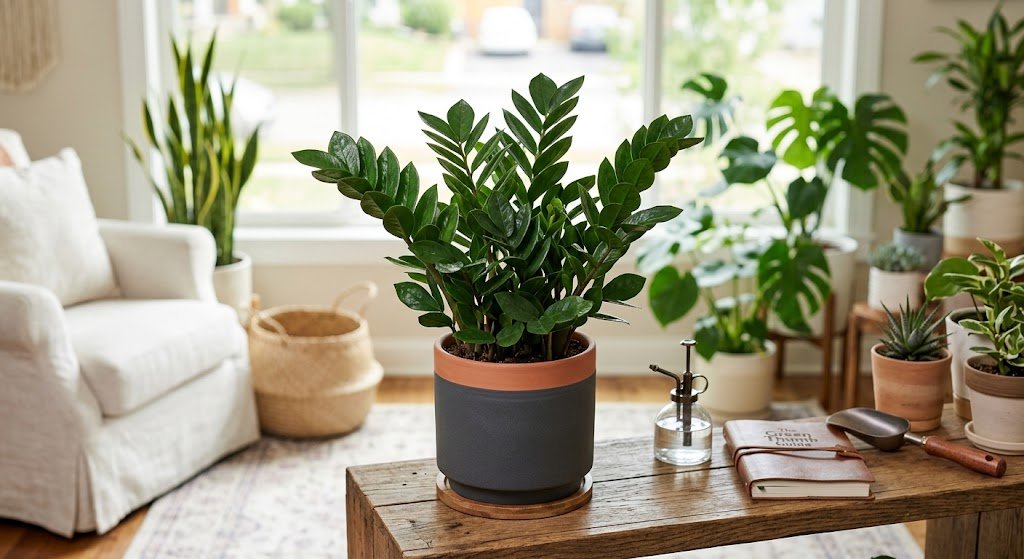
Zenzi ZZ Plant is a compact and attractive variety of the popular ZZ Plant. It is known for its short, upright growth and dense clusters of glossy, dark-green leaves. Its naturally compact form makes it especially suitable for small spaces, desks, shelves, and indoor corners. Zenzi stores water in underground rhizomes like other ZZ Plants, making it drought-tolerant and low-maintenance plant. Zenzi ZZ plant is adaptable to around all indoor light conditions, it is an excellent choice for beginners and anyone looking for an attractive, easy-care house plant / indoor plant.
Botanical name / Scientific name of Zenzi ZZ Plant is (Zamioculcas zamiifolia ‘Zenzi’).
Zenzi ZZ Plant care:
All the types / forms of ZZ Plant require the same care.
- Light: Bright, indirect light is ideal for Zenzi ZZ plant. It can tolerate low light conditions, but its growth will be slower. Avoid harsh direct afternoon sunlight.
- Watering: Water Zenzi ZZ plant when the soil is dried out completely. Water thoroughly and let excess drain away. Do not Overwater it. If the leaves turn yellow, it means you are overwatering it.
- Soil: Use a well-draining potting mix ideally one designed for succulents or cactus.
- Temperature: Temperature around 18-30°C is ideal for Zenzi ZZ plant. Keep it away from cold drafts and temperatures below about 10°C (50°F).
- Humidity: Normal indoor humidity is perfectly fine For Zenzi ZZ plant; there is no requirement of misting.
- Fertilizer: Feed lightly with a balanced houseplant fertilizer about once every 2–3 months during active growth. Do not overfertilize it.
- Pruning: Remove yellow or damaged leaves/stems at the base with clean scissors.
- Repotting: Usually every 2–3 years, or when the rhizomes have filled the pot.
Is Zenzi ZZ Plant toxic to cats and dogs?
Yes, the Zenzi ZZ plant is toxic to cats and dogs if it is chewed or eaten / swallowed.
The Zenzi ZZ Plant contains tiny, needle-like crystals called insoluble calcium oxalates. When a cat or dog bites the leaves or stems, these crystals can cause painful irritation in the mouth and digestive tract.
Possible Symptoms: Drooling, pawing at the mouth, retching, vomiting, diarrhea, and difficulty swallowing. In some rare cases, significant swelling in the mouth or throat can cause breathing difficulties.
If your cat or dog eats Zenzi ZZ Plant: The Zenzi ZZ plant exposure is usually not life-threatening, and many cases result in temporary irritation rather than serious poisoning. If the pets that develop severe swelling, repeated vomiting, difficulty swallowing, or trouble breathing, contact your veterinarian.
Supernova ZZ Plant:
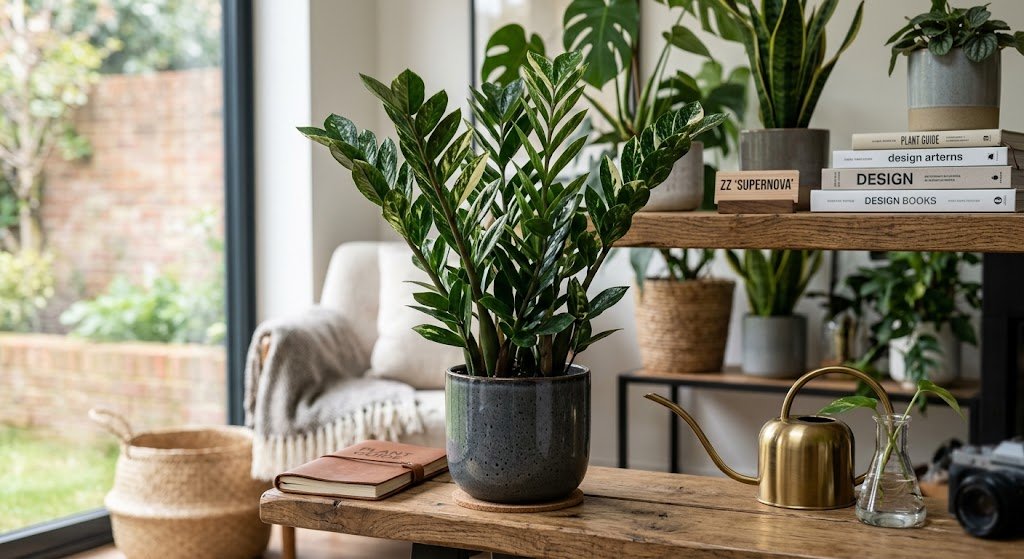
Supernova ZZ Plant is a striking and relatively rare ZZ plant variety. Supernova ZZ plant is admired for its glossy foliage, upright growth, and dark coloration. Like other ZZ Plants, it stores water in underground rhizomes, making it naturally drought-tolerant and easy to care indoor plant / house plant. It adapts well to indoor environments and can handle lower-light conditions also, although it grows well and healthy in bright, indirect light. With its bold appearance and low-maintenance nature, the Supernova ZZ Plant is an excellent choice for adding a touch of greenery to homes and offices.
Botanical name / Scientific name of Supernova ZZ Plant is (Zamioculcas zamiifolia ‘Supernova’).
Supernova ZZ Plant care:
All the types / forms of ZZ Plant require the same care.
- Light: Bright, indirect light is ideal for Supernova ZZ plant. It can tolerate low light conditions, but its growth will be slower. Avoid harsh direct afternoon sunlight.
- Watering: Water Supernova ZZ plant when the soil is dried out completely. Water thoroughly and let excess drain away. Do not Overwater it. If the leaves turn yellow, it means you are overwatering it.
- Soil: Use a well-draining potting mix ideally one designed for succulents or cactus.
- Temperature: Temperature around 18-30°C is ideal for Supernova ZZ plant. Keep it away from cold drafts and temperatures below about 10°C (50°F).
- Humidity: Normal indoor humidity is perfectly fine For Supernova ZZ plant; there is no requirement of misting.
- Fertilizer: Feed lightly with a balanced houseplant fertilizer about once every 2–3 months during active growth. Do not overfertilize it.
- Pruning: Remove yellow or damaged leaves/stems at the base with clean scissors.
- Repotting: Usually every 2–3 years, or when the rhizomes have filled the pot.
Is Supernova ZZ Plant toxic to cats and dogs?
Yes, the SupernovaZZ plant is toxic to cats and dogs if it is chewed or eaten / swallowed.
The Supernova ZZ Plant contains tiny, needle-like crystals called insoluble calcium oxalates. When a cat or dog bites the leaves or stems, these crystals can cause painful irritation in the mouth and digestive tract.
Possible Symptoms: Drooling, pawing at the mouth, retching, vomiting, diarrhea, and difficulty swallowing. In some rare cases, significant swelling in the mouth or throat can cause breathing difficulties.
If your cat or dog eats Supernova ZZ Plant: The Supernova ZZ plant exposure is usually not life-threatening, and many cases result in temporary irritation rather than serious poisoning. If the pets that develop severe swelling, repeated vomiting, difficulty swallowing, or trouble breathing, contact your veterinarian.
Variegated ZZ Plant:
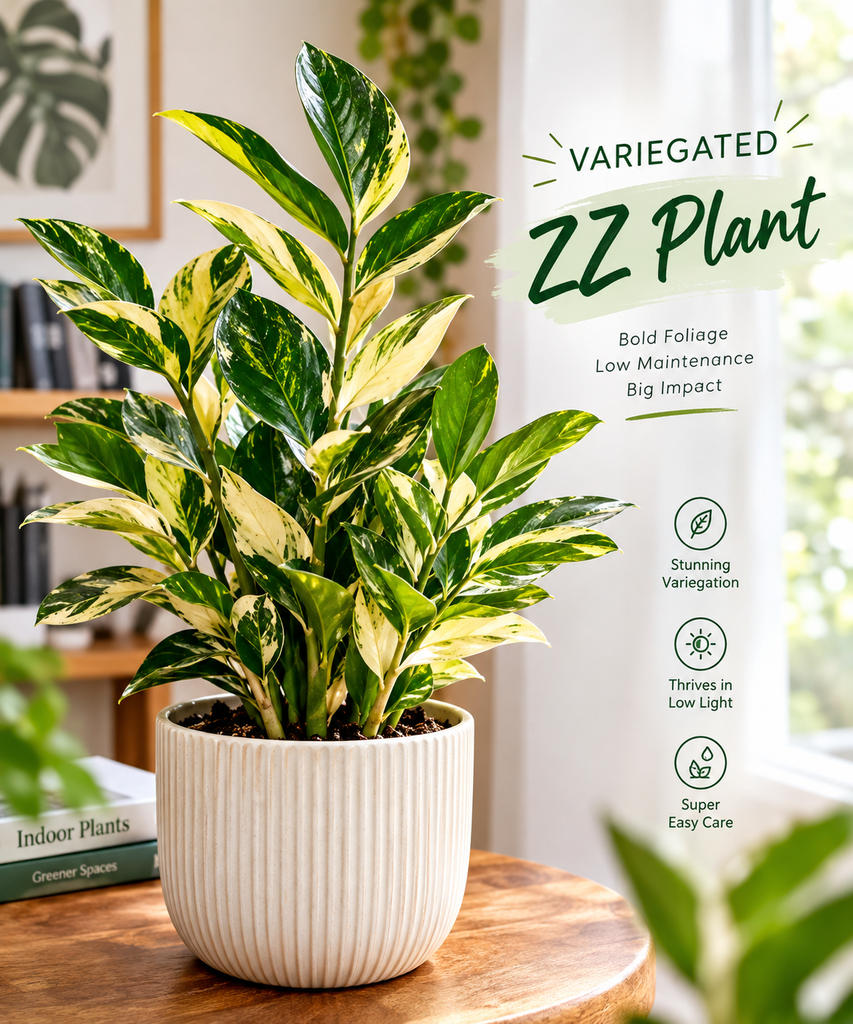
Variegated ZZ Plant is a stunning house plant / indoor plant valued for its glossy green leaves decorated with creamy white to yellow variegation. Each leaf of variegated ZZ plant can develop its own unique pattern, which gives the plant a distinctive, eye-catching appearance. Like other ZZ Plants, it stores water in underground rhizomes, making it drought-tolerant and naturally low-maintenance. It adapts well to almost all indoor conditions and prefers bright, indirect light to support healthy growth and maintain its beautiful variegation. With its elegant foliage and easygoing nature, the Variegated ZZ Plant is an amazing choice for plant lovers and indoor collections.
Botanical name / Scientific name of Variegated ZZ Plant is (Zamioculcas zamiifolia ‘Variegata’).
Variegated ZZ Plant care:
All the types / forms of ZZ Plant require the same care.
- Light: Bright, indirect light is ideal for Variegated ZZ plant. It can tolerate low light conditions, but its growth will be slower. Avoid harsh direct afternoon sunlight.
- Watering: Water Variegated ZZ plant when the soil is dried out completely. Water thoroughly and let excess drain away. Do not Overwater it. If the leaves turn yellow, it means you are overwatering it.
- Soil: Use a well-draining potting mix ideally one designed for succulents or cactus.
- Temperature: Temperature around 18-30°C is ideal for Variegated ZZ plant. Keep it away from cold drafts and temperatures below about 10°C (50°F).
- Humidity: Normal indoor humidity is perfectly fine For Variegated ZZ plant; there is no requirement of misting.
- Fertilizer: Feed lightly with a balanced houseplant fertilizer about once every 2–3 months during active growth. Do not overfertilize it.
- Pruning: Remove yellow or damaged leaves/stems at the base with clean scissors.
- Repotting: Usually every 2–3 years, or when the rhizomes have filled the pot.
Is Variegated ZZ Plant toxic to cats and dogs?
Yes, the Variegated ZZ plant is toxic to cats and dogs if it is chewed or eaten / swallowed.
The Variegated ZZ Plant contains tiny, needle-like crystals called insoluble calcium oxalates. When a cat or dog bites the leaves or stems, these crystals can cause painful irritation in the mouth and digestive tract.
Possible Symptoms: Drooling, pawing at the mouth, retching, vomiting, diarrhea, and difficulty swallowing. In some rare cases, significant swelling in the mouth or throat can cause breathing difficulties.
If your cat or dog eats Variegated ZZ Plant: The Variegated ZZ plant exposure is usually not life-threatening, and many cases result in temporary irritation rather than serious poisoning. If the pets that develop severe swelling, repeated vomiting, difficulty swallowing, or trouble breathing, contact your veterinarian.
Chameleon ZZ Plant:
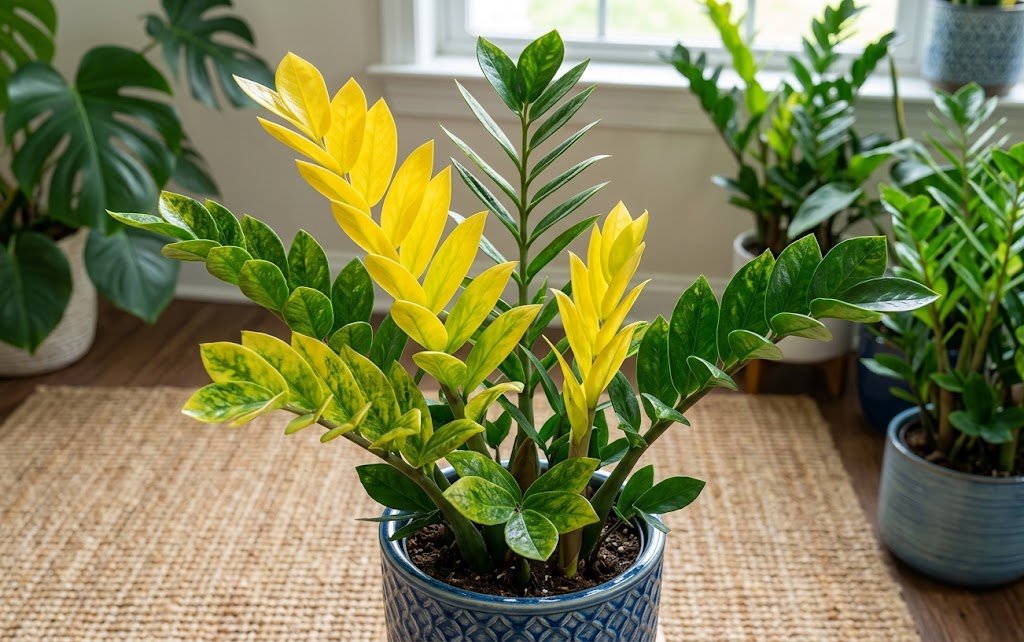
Chameleon ZZ Plant is a variety of ZZ plant known for its vibrant, changing foliage. Its new leaves emerge bright yellow to golden and gradually develop deeper green tones as they mature, creating a beautiful mix of colors on the plant. Like other ZZ Plants, it stores water in underground roots, which makes it a drought-tolerant and low-maintenance indoor plant / house plant. Its adaptable nature and eye-catching foliage make the Chameleon ZZ Plant a wonderful choice for adding a unique touch of greenery to indoor spaces.
Botanical name / Scientific name of Chameleon ZZ Plant is (Zamioculcas zamiifolia ‘Chameleon’).
Chameleon ZZ Plant care:
All the types / forms of ZZ Plant require the same care.
- Light: Bright, indirect light is ideal for Chameleon ZZ plant. It can tolerate low light conditions, but its growth will be slower. Avoid harsh direct afternoon sunlight.
- Watering: Water Chameleon ZZ plant when the soil is dried out completely. Water thoroughly and let excess drain away. Do not Overwater it. If the leaves turn yellow, it means you are overwatering it.
- Soil: Use a well-draining potting mix ideally one designed for succulents or cactus.
- Temperature: Temperature around 18-30°C is ideal for Chameleon ZZ plant. Keep it away from cold drafts and temperatures below about 10°C (50°F).
- Humidity: Normal indoor humidity is perfectly fine For Chameleon ZZ plant; there is no requirement of misting.
- Fertilizer: Feed lightly with a balanced houseplant fertilizer about once every 2–3 months during active growth. Do not overfertilize it.
- Pruning: Remove yellow or damaged leaves/stems at the base with clean scissors.
- Repotting: Usually every 2–3 years, or when the rhizomes have filled the pot.
Is Chameleon ZZ Plant is toxic to cats and dogs?
Yes, the Chameleon ZZ plant is toxic to cats and dogs if it is chewed or eaten / swallowed.
The Chameleon ZZ Plant contains tiny, needle-like crystals called insoluble calcium oxalates. When a cat or dog bites the leaves or stems, these crystals can cause painful irritation in the mouth and digestive tract.
Possible Symptoms: Drooling, pawing at the mouth, retching, vomiting, diarrhea, and difficulty swallowing. In some rare cases, significant swelling in the mouth or throat can cause breathing difficulties.
If your cat or dog eats Chameleon ZZ Plant: The Chameleon ZZ plant exposure is usually not life-threatening, and many cases result in temporary irritation rather than serious poisoning. If the pets that develop severe swelling, repeated vomiting, difficulty swallowing, or trouble breathing, contact your veterinarian.
Zamicro ZZ Plant:
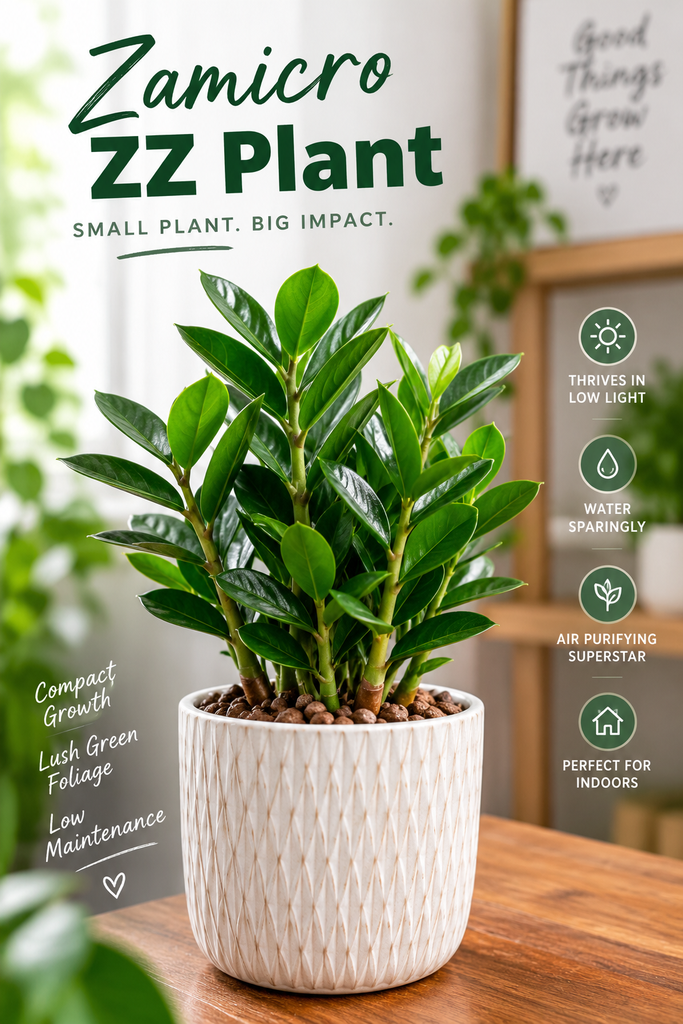
Zamicro ZZ Plant is a compact variety of ZZ plant known for its upright growth, glossy dark-green leaves, and neat, bushy appearance. Zamicro ZZ plant is smaller than the standard ZZ Plant, it is well suited to desks, shelves, apartments, and other spaces where room is limited. Like other ZZ Plants, it stores water in underground rhizomes, making it drought-tolerant and easy to maintain plant. Its compact size and attractive foliage make it a great choice for both beginners and indoor plant / house plant lovers.
Botanical name / Scientific name of Zamicro ZZ Plant is (Zamioculcas zamiifolia ‘Zamicro’).
There are two more forms / types of Zamicro ZZ plant.
1. Zamicro MIni ZZ Plant.
2. Zamicro Variegated ZZ Plant.
Zamicro Mini ZZ Plant:
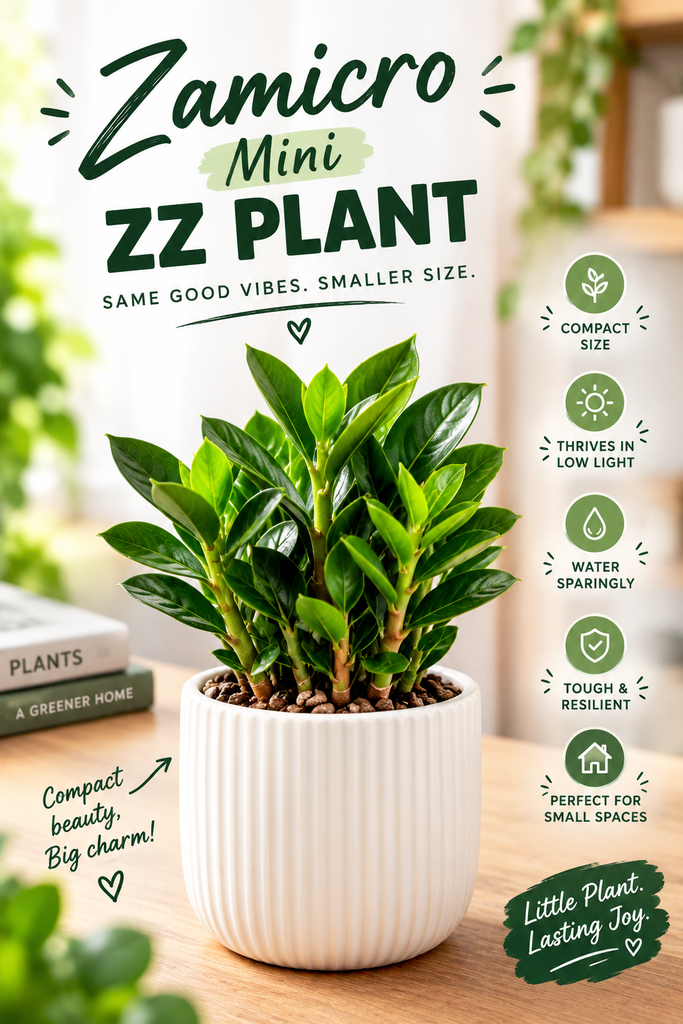
Zamicro Mini ZZ Plant is a miniature, compact form of the ZZ Plant, valued for its small size and attractive, glossy green foliage. Its tidy growth habit makes it ideal for desks, shelves, windowsills, and other small indoor spaces. Like other ZZ varieties, it stores water in underground rhizomes, allowing it to tolerate dry periods and occasional neglect. Easygoing and space-friendly, the Zamicro Mini ZZ Plant is a charming choice for beginners and collectors.
Botanical name / Scientific name of Zamicro mini ZZ Plant is (Zamioculcas zamiifolia ‘Zamicro mini’).
Zamicro variegated ZZ Plant:
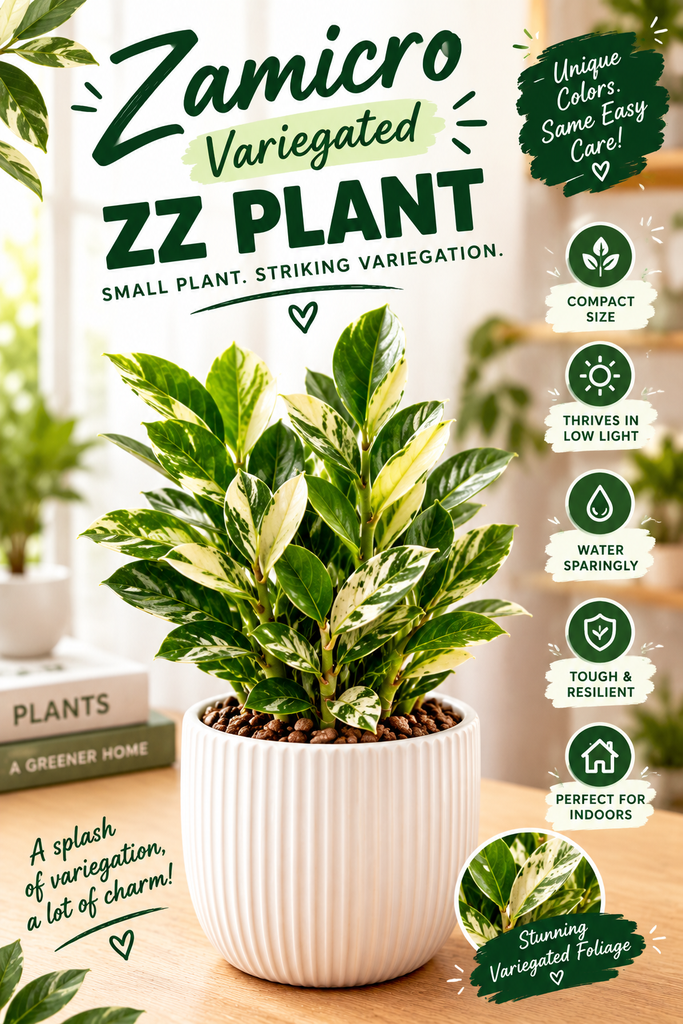
Zamicro Variegated ZZ Plant combines the compact growth of the Zamicro with eye-catching variegated foliage, typically featuring green leaves marked with creamy or yellow patterns. Its smaller stature makes it ideal for limited indoor spaces, while its distinctive coloring adds extra visual appeal. Like other ZZ Plants, it stores water in underground rhizomes, making it drought-tolerant and relatively low-maintenance. With its compact form and unique foliage, it makes a outstanding addition to any indoor plant collection.
Botanical name / Scientific name of Zamicro variegated ZZ Plant is (Zamioculcas zamiifolia ‘Zamicro Variegated’).
Zamicro ZZ Plant care:
All the types / forms of ZZ Plant require the same care.
- Light: Bright, indirect light is ideal for Zamicro ZZ plant. It can tolerate low light conditions, but its growth will be slower. Avoid harsh direct afternoon sunlight.
- Watering: Water Zamicro ZZ plant when the soil is dried out completely. Water thoroughly and let excess drain away. Do not Overwater it. If the leaves turn yellow, it means you are overwatering it.
- Soil: Use a well-draining potting mix ideally one designed for succulents or cactus.
- Temperature: Temperature around 18-30°C is ideal for Zamicro ZZ plant. Keep it away from cold drafts and temperatures below about 10°C (50°F).
- Humidity: Normal indoor humidity is perfectly fine For Zamicro ZZ plant; there is no requirement of misting.
- Fertilizer: Feed lightly with a balanced houseplant fertilizer about once every 2–3 months during active growth. Do not overfertilize it.
- Pruning: Remove yellow or damaged leaves/stems at the base with clean scissors.
- Repotting: Usually every 2–3 years, or when the rhizomes have filled the pot.
Is Zamicro ZZ Plant toxic to cats and dogs?
Yes, the Zamicro ZZ plant is toxic to cats and dogs if it is chewed or eaten / swallowed.
The Zamicro ZZ Plant contains tiny, needle-like crystals called insoluble calcium oxalates. When a cat or dog bites the leaves or stems, these crystals can cause painful irritation in the mouth and digestive tract.
Possible Symptoms: Drooling, pawing at the mouth, retching, vomiting, diarrhea, and difficulty swallowing. In some rare cases, significant swelling in the mouth or throat can cause breathing difficulties.
If your cat or dog eats Zamicro ZZ Plant: The Zamicro ZZ plant exposure is usually not life-threatening, and many cases result in temporary irritation rather than serious poisoning. If the pets that develop severe swelling, repeated vomiting, difficulty swallowing, or trouble breathing, contact your veterinarian.

One Comment