
SNAKE PLANT / SANSEVIERIA
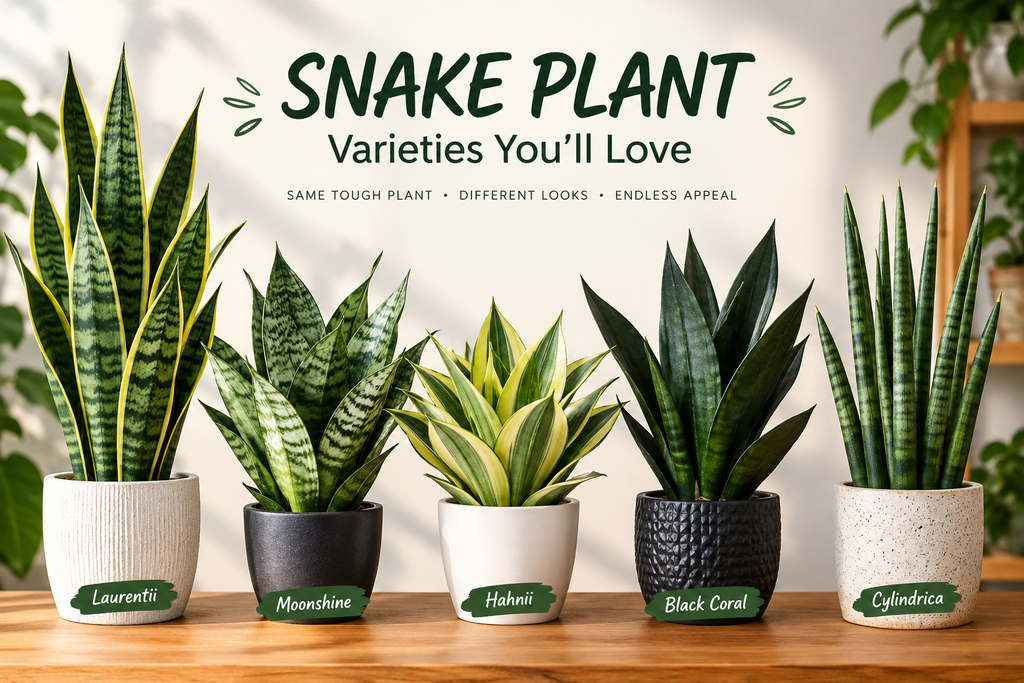
Snake plant / Sansevieria (Dracaena Trifasciata) is known for its air-purifying abilities and it’s one of the most popular easy to care indoor plants / house plants. Snake plants / Sansevierias are also famous for their tall, upright leaves, attractive patterns and ability to tolerate low light and infrequent watering.
Snake Plant is one of the best choices for indoor spaces like homes, offices and low-light spaces.
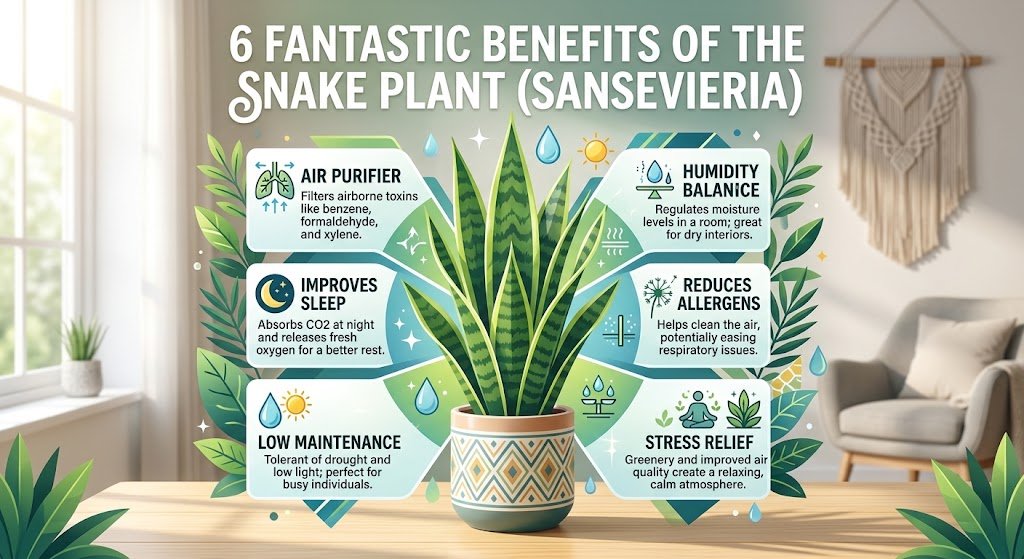
Benefits of Snake Plant / Sansevieria:
- Easy to care: Snake plants / Sansevieria can adapt to different indoor conditions and don’t need frequent watering, because they are very low maintenance plants.
- Helps Improve Indoor Air: Snake plants / Sansevieria can help absorb certain pollutants from the air, they can be a nice addition to a healthy indoor environment.
- Great for bedrooms: Snake plants / Sansevieria use a type of photosynthesis that allows them to take in carbon dioxide at night. This makes them a good choice for bedrooms.
- Needs Little Water: Their thick leaves store water, so snake plants can survive periods without watering. This makes them a great choice if you sometimes forget to water your plants.
- Adds Beauty to Your Home: With their tall, elegant leaves, snake plants add a fresh and stylish touch to bedrooms, living rooms, offices, and other indoor spaces.
- Long Lasting Plant: With proper care, a snake plant / sansevieria can live for many years, making it a wonderful long term addition to your home.
Types of Snake Plant / Sansevieria:
Snake Plants / Sansevierias are one of the most liked decorative Indoor plants / house plants known for their attractive patterns, tall, upright leaves, easy-care, and ability to grow indoors and low light spaces. Here are some famous types of Snake plants / Sansevieria with their botanical names below:
- Sansevieria Laurentii (Dracaena trifasciata Laurentii).
- Sansevieria Zeylanica (Dracaena trifasciata Zeylanica).
- Sansevieria Moonshine (Dracaena trifasciata Moonshine).
- Sansevieria Birds Nest (Dracaena trifasciata Hahnii).
- Sansevieria Golden Hahnii (Dracaena trifasciata Golden Hahnii).
- Sansevieria Black Gold (Dracaena trifasciata Black Gold).
- Sansevieria Bantels Sensation (Dracaena trifasciata Bantel’s Sensation).
- Sansevieria Twisted Sister (Dracaena trifasciata Twisted Sister).
- Sansevieria Cylindrica: (Dracaena angolensis).
- Whale Fin Snake Plant: (Dracaena masoniana).
- Sansevieria Samurai: (Dracaena hanningtonii).
Sansevieria Laurentii:
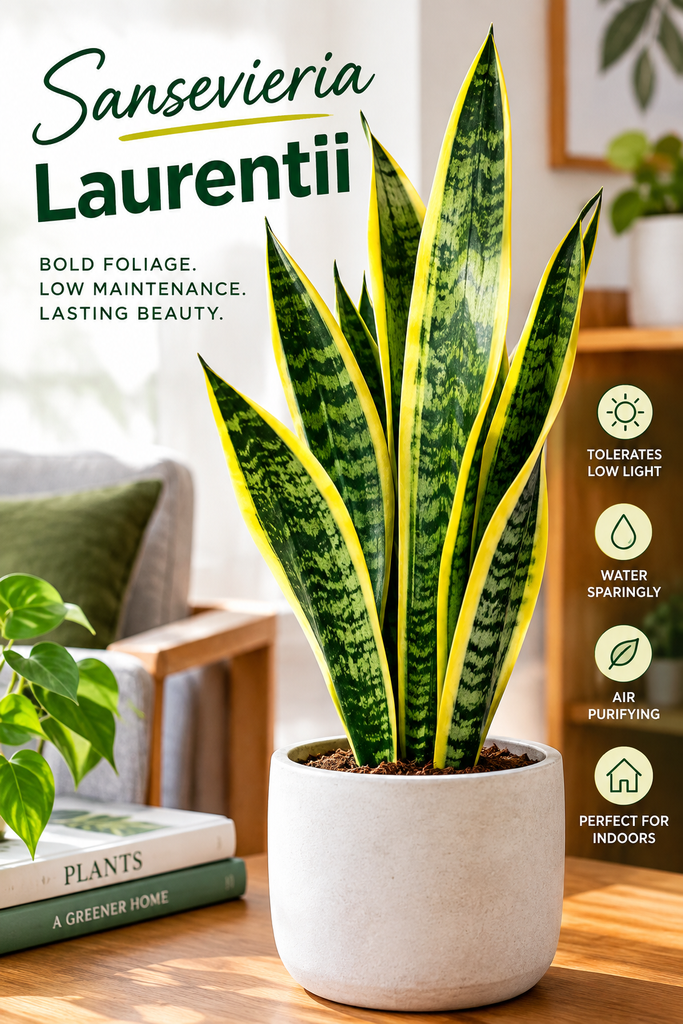
Sansevieria Laurentii is one of the most popular varieties of snake plant. It is recognized by its air purifying quality and tall, upright green leaves with attractive yellow edges. It is a robust plant so it is a best choice for beginners because it can survive in little maintenance and can bear many indoor conditions because it is an indoor plant / house plant.
Botanical name / Scientific name of Sansevieria Laurentii is Dracaena trifasciata ‘Laurentii’.
Sansevieria Laurentii Care:
- Light: Sansevieria Laurentii grows well in low light but prefers bright, indirect light for healthy growth and better leaf coloring.
- Watering: Allow the soil to dry completely before watering again. Avoid frequent watering. Overwatering is one of the biggest risks and can lead to root rot.
- Soil: Use a loose, well-draining potting mix to prevent surplus moisture around the roots.
- Pot: Choose a pot with drainage holes so excess water can escape.
- Temperature: It prefers normal indoor temperatures and should be protected from extreme cold.
- Humidity: Does not require high humidity and generally does well in average indoor humidity.
- Fertilizer: Feed lightly during the active growing season. Avoid excessive fertilizer.
Is Sansevieria Laurentii toxic to cats and dogs?
Yes. Sansevieria Laurentii / Snake Plant Laurentii is toxic to cats and dogs and if swallowed.
Sansevieria Laurentii contains saponins, which is a toxic compound and can irritate the digestive system of cats and dogs.
Possible symptoms: Vomiting, diarrhea, nausea, drooling, and loss of appetite may occur after ingestion.
If your cat or dog eats Sansevieria Laurentii: Contact your veterinarian, particularly if your cat develops symptoms or has eaten a significant amount of the plant.
Sansevieria Zeylanica:
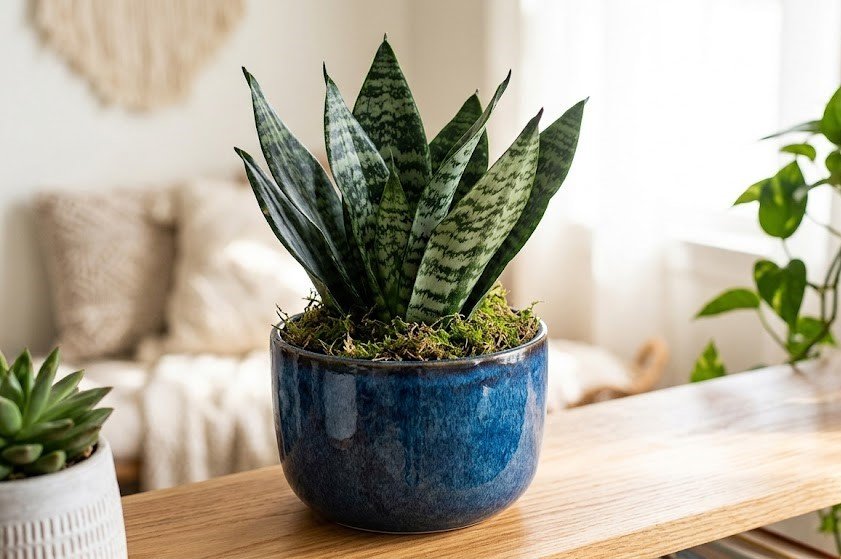
Sansevieria Zeylancia is a hardy, beautiful and low maintenance indoor plant / house plant and commonly known as Zeylancia Snake Plant. Its air purifying quality and easy-care nature makes it a popular choice for homes, offices, other indoor spaces and beginner plant enthusiasts. It is known for its tall, upright leaves with attractive dark-green patterns. It adjusts well to indoor conditions and can tolerate low light and infrequent watering.
Botanical name / Scientific name of Sansevieria Zeylancia is Dracaena trifasciata ‘Zeylancia’.
Sansevieria Zeylancia care:
- Light: Sansevieria Zeylancia prefers bright, indirect light but can tolerate low-light conditions. Avoid harsh direct sunlight.
- Watering: Water it only when the soil is completely dry. Avoid overwatering, as it can cause root rot. Yellow, soft, or mushy leaves usually indicate overwatering.
- Soil: Use a well-draining, potting mix for its better growth.
- Temperature: Protect it from cold drafts and frost. Keep it in a warm environment, ideal temperature for Sansevieria Zeylancia is between 15–30°C (59–86°F).
- Humidity: Sansevieria Zeylancia can stay and grow good in normal indoor humidity, no special humidity requirements are needed.
- Fertilizer: Feed it with a balanced, diluted house plant fertilizer once every 2–3 months during the growing season.
- Pot: Choose a pot with drainage holes to prevent water from collecting around the roots. Repot every 2–3 years, or when the plant becomes root-bound.
Is Sansevieria Zeylancia toxic to cats and dogs?
Yes. Sansevieria Zeylancia / Snake Plant Zeylancia is toxic to cats and dogs and if swallowed.
Sansevieria Zeylancia contains saponins, which is a toxic compound and can irritate the digestive system of cats and dogs.
Possible symptoms: Vomiting, diarrhea, nausea, drooling, and loss of appetite may occur after ingestion.
If your cat or dog eats Sansevieria Zeylancia: Contact your veterinarian, particularly if your cat develops symptoms or has eaten a significant amount of the plant.
Sansevieria Moonshine:
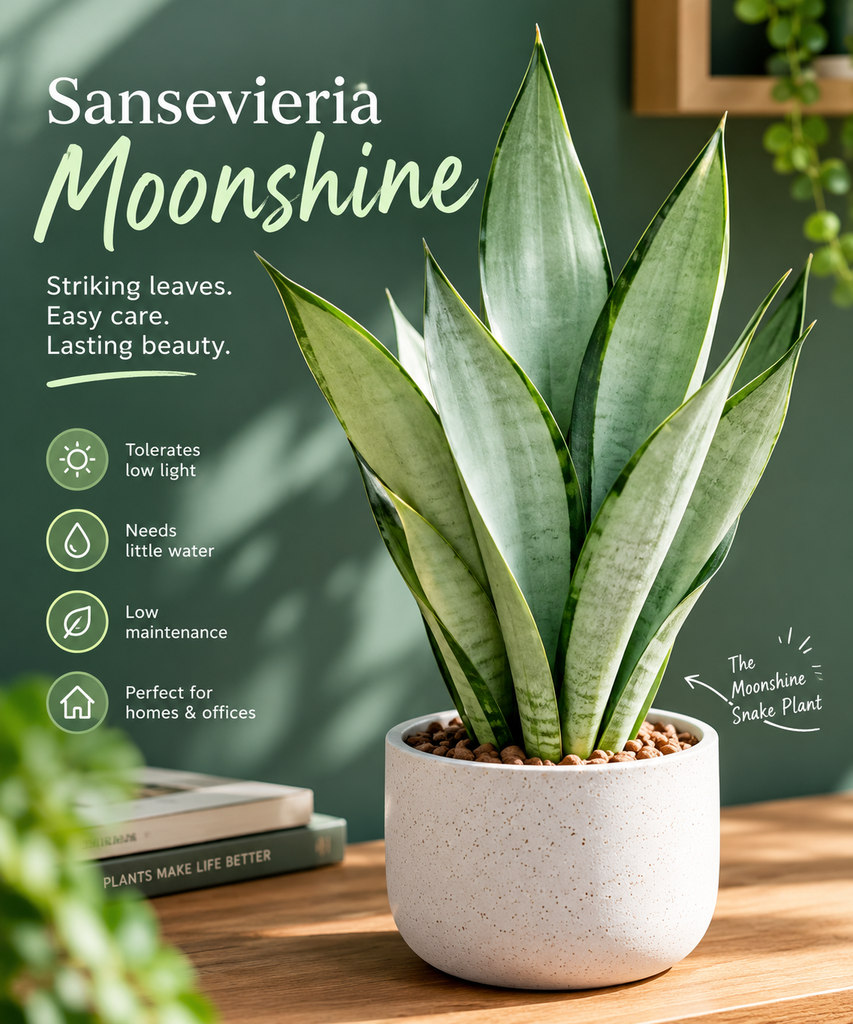
Sansevieria Moonshine is a lovely and distinctive variety of Snake Plant, it is admired for its air-purifying quality. Its elegant, silvery-green leaves. Its smooth, upright foliage gives it a modern and sophisticated appearance which makes it a wonderful choice for both homes and offices.
Unlike many indoor plants / house plants, Sansevieria Moonshine is easy to care for and relatively drought-tolerant. It prefers bright, indirect light but can also adapt to lower-light conditions.
Sansevieria Moonshine brings a calm, fresh, and stylish touch With its unique silver foliage and low-maintenance nature to any indoor space.
Botanical name / Scientific name of Sansevieria Moonshine is Dracaena trifasciata ‘Moonshine’.
Sansevieria Moonshine care:
- Light: Place Sansevieria Moonshine in bright, indirect light. It can also grow in low light conditions, but low light makes its growth may slower. If the leaves become weak or floppy, try moving the plant to a brighter spot.
- Watering: Let the soil dry completely before watering. Avoid overwatering, as too much water can rot the root.
Yellow or soft leaves usually mean too much water. Wrinkled leaves can mean the plant needs water - Soil: Use well-draining potting mix. It helps to achieve a healthy growth. This hardy plant can handle dry soil much better than soggy soil.
- Potting: Always use a pot with drainage holes. Repot Sansevieria Moonshine only when the plant becomes root-bound. Choose a pot that is just one size larger than the current pot.
- Temperature: Sansevieria Moonshine likes warm temperatures. Do nor place it in very cold conditions and cold drafts. Around 15–24°C is ideal temperature for Sansevieria Moonshine.
- Humidity: Normal/low household humidity is fine for Sansevieria Moonshine.
- Fertilizer: Sansevieria Moonshine should be Fed with a balanced liquid fertilizer once a month during the growing season.
Is Sansevieria Moonshine toxic to cats and dogs?
Yes. Sansevieria Moonshine / Snake Plant Moonshine is toxic to cats and dogs and if swallowed.
Sansevieria Moonshine contains saponins, which is a toxic compound and can irritate the digestive system of cats and dogs.
Possible symptoms: Vomiting, diarrhea, nausea, drooling, and loss of appetite may occur after ingestion.
If your cat or dog eats Sansevieria Moonshine: Contact your veterinarian, particularly if your cat develops symptoms or has eaten a significant amount of the plant.
Sansevieria Birds Nest:
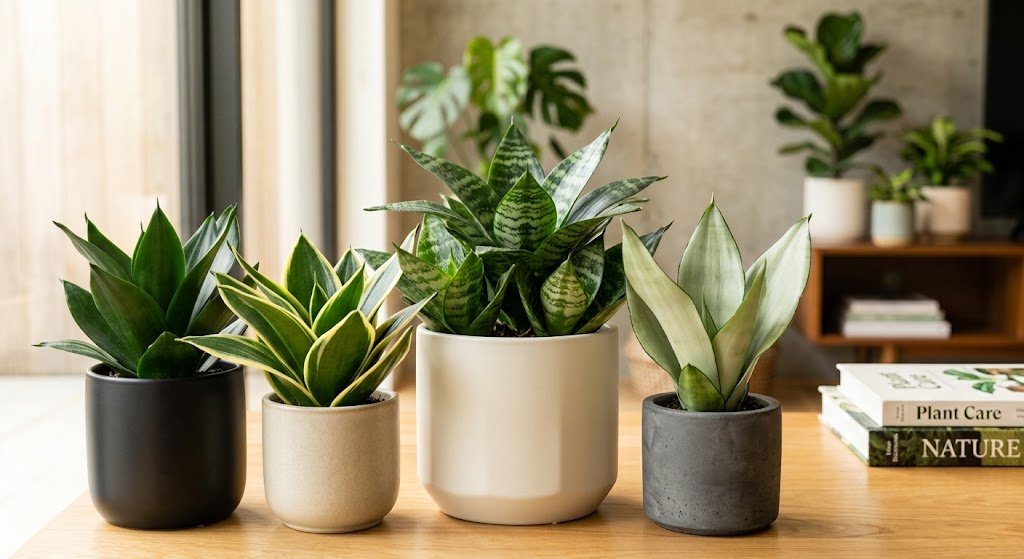
Sansevieria Birds Nest is a compact and beautiful house plant that has air-purifying quality and it is perfect for small spaces. Unlike tall snake plants, it grows in a neat rosette shape, with short, thick leaves that add a modern vibe to any room and any indoor space. It is also known as the Bird’s Nest Snake Plant.
It is also one of the easiest houseplants to care for. Sansevieria Birds Nest can tolerate low light and does not need frequent watering, making it a great choice for beginners and busy plant lovers. With the right care, this hardy little plant can stay healthy and attractive for many years.
Botanical name / Scientific name of Sansevieria Bird’s nest is Dracaena trifasciata ‘Hahnii‘.
Sansevieria Bird’s Nest care:
- Light: Place Sansevieria Birds Nest in bright, indirect light. It can also grow in low light conditions, but low light makes its growth may slower. If the leaves become weak or floppy, try moving the plant to a brighter spot.
- Watering: Let the soil dry completely before watering. Avoid overwatering, as too much water can rot the root.
Yellow or mushy leaves usually mean too much water. Wrinkled leaves can mean the plant needs water - Soil: Use well-draining potting mix. It helps to achieve a healthy growth. This hardy plant can handle dry soil much better than soggy soil.
- Potting: Always use a pot with drainage holes. Repot Sansevieria Birds Nest only when the plant becomes root-bound. Choose a pot that is just one size larger than the current pot.
- Temperature: Sansevieria Bird’s nest likes warm temperatures. Do nor place it in very cold conditions and cold drafts. Around 15–30°C (59–86°F) is ideal temperature for Sansevieria Bird’s Nest.
- Humidity: Normal/low household humidity is fine for Sansevieria Bird’s Nest.
- Fertilizer: Sansevieria Bird’s Nest should be Fed with a balanced liquid fertilizer once a month during the growing season.
Is Sansevieria Bird’s Nest toxic to cats and dogs?
Yes. Sansevieria Birds Nest / Snake Plant Birds Nest is toxic to cats and dogs and if swallowed.
Sansevieria Birds nest contains saponins, which is a toxic compound and can irritate the digestive system of cats and dogs.
Possible symptoms: Vomiting, diarrhea, nausea, drooling, and loss of appetite may occur after ingestion.
If your cat or dog eats Sansevieria Birds Nest: Contact your veterinarian, particularly if your cat develops symptoms or has eaten a significant amount of the plant.
Sansevieria Golden Hahnii:
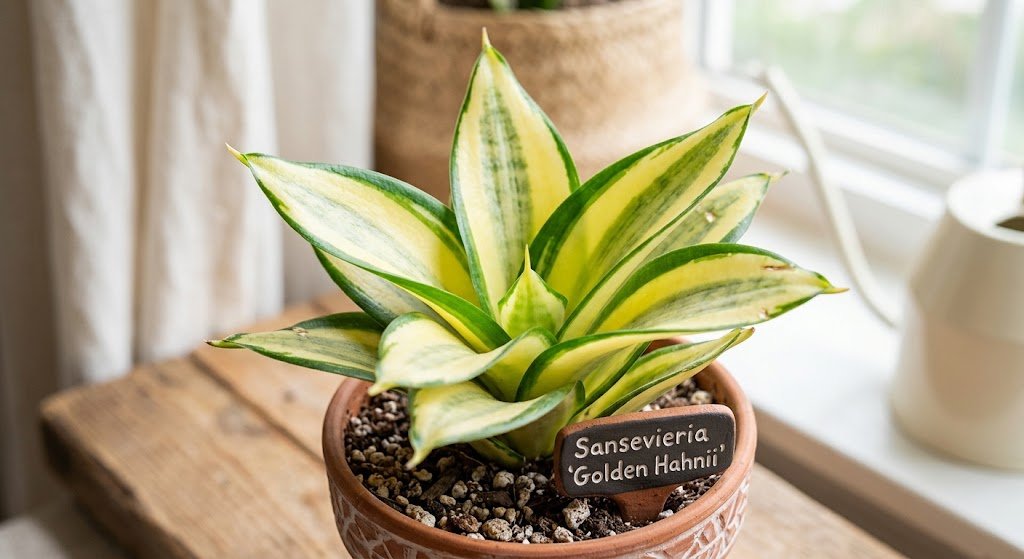
Sansevieria Golden Hahnii / Snake Plant Golden Hahnii is a charming and compact variety of the popular Snake Plant, it is being loved for its air-purifying quality and its attractive rosette shape and striking green leaves edged with golden-yellow margins. Unlike taller Sansevieria / Snake Plant varieties, Golden Hahnii grows close to the soil, making it a best choice for desks, shelves, windowsills, and small indoor spaces.
Its compact size and beautiful variegated foliage make it a wonderful addition to modern interiors, plant collections, and small spaces where a touch of greenery is desired.
Sansevieria Golden Hahnii / Snake Plant Golden Hahnii is a low-maintenance, drought-tolerant, and adaptable to many indoor conditions because it is an indoor plant / house plant. It is a great choice for both beginners and experienced plant lovers. With the right balance of light, well-draining soil, and careful watering, Sansevieria Golden Hahnii can remain healthy and attractive for many years.
Botanical name / Scientific name of Sansevieria Golden Hahnii is Dracaena trifasciata ‘Golden Hahnii‘.
Sansevieria Golden Hahnii care:
- Light: Prefers bright, indirect light. It can tolerate lower light, but brighter light helps maintain its attractive golden variegation.
- Watering: Allow the soil to dry out completely between watering. Avoid frequent watering, as soggy soil can cause root rot. Soft, yellowing, or mushy leaves can indicate overwatering.
- Soil: Use a well-draining cactus or succulent soil mix.
- Potting: Choose a pot with drainage holes to allow excess water to escape. Repot every 2–3 years or when the plant becomes severely root-bound. Use a pot only slightly larger than the current one.
- Temperature: Keep it in a warm environment, ideally around 15–30°C (59–86°F). Do not place it near frost and cold drafts.
- Humidity: Average indoor humidity is sufficient. It does not need high humidity.
- Fertilizer: Feed it with a diluted, balanced house plant fertilizer about once every 1–2 months during the growing season.
Is Sansevieria Golden Hahnii toxic to cats and dogs?
Yes. Sansevieria Golden Hahnii / Snake Plant Golden Hahnii is toxic to cats and dogs and if swallowed.
Sansevieria Golden Hahnii contains saponins, which is a toxic compound and can irritate the digestive system of cats and dogs.
Possible symptoms: Vomiting, diarrhea, nausea, drooling, and loss of appetite may occur after ingestion.
If your cat or dog eats Sansevieria Golden Hahnii: Contact your veterinarian, particularly if your cat develops symptoms or has eaten a significant amount of the plant.
Sansevieria Black Gold:
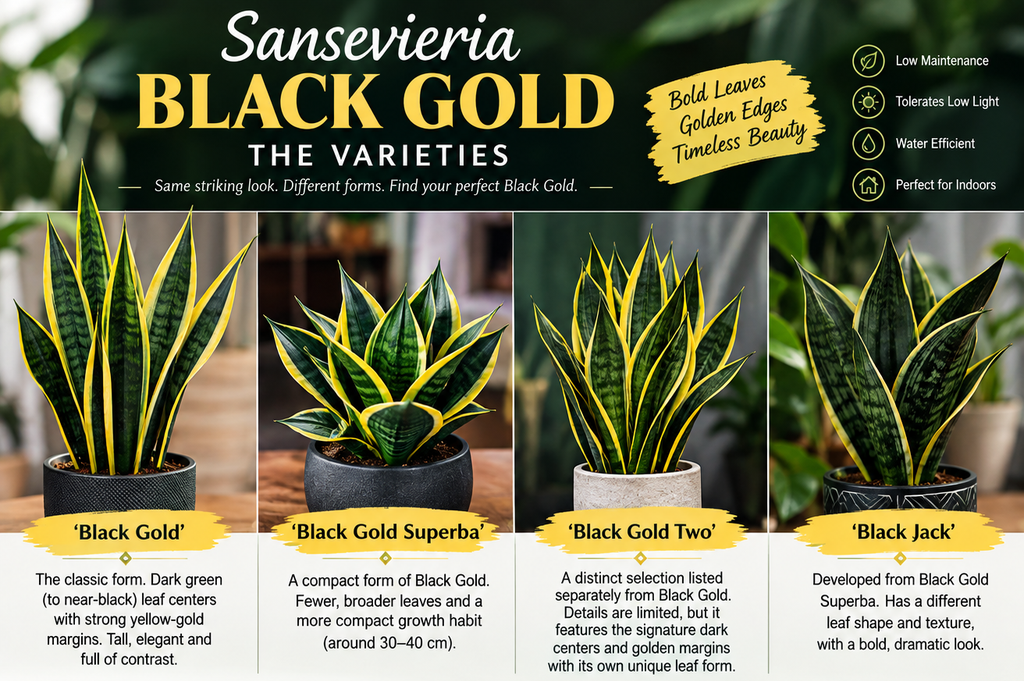
Sansevieria Black Gold / Snake Plant Black Gold is a striking snake plant known for its air-purifying quality and its dark green leaves and bright golden-yellow margins. Black Gold is drought-tolerant, hardy, low-maintenance house plant and adaptable to indoor conditions.
Mature plants can become quite tall. Its upright growth and dramatic foliage make it an excellent choice for adding vertical interest to homes, offices, and plant collections.
Like other snake plants, it can tolerate relatively low light, although bright, indirect light generally helps maintain strong growth and attractive coloration.
Botanical name / Scientific name of Sansevieria Black Gold is Dracaena trifasciata ‘Black Gold’.
Sansevieria Black Gold care:
- Light: Bright, indirect light is ideal for Sansevieria Black Gold. It also tolerates low light. A little gentle morning sun is fine. It keeps its yellow leaf margins and darker green pattern best with bright, indirect light.
- Watering: Water only when the soil is completely dry. Depending on conditions, this may be every 2–4 weeks. If the leaves become soft, yellow, or mushy, the plant may be getting too much water. If the leaves are wrinkled or curling inward, it may be thirsty.
- Soil: Use very well-draining cactus / succulent soil.
- Potting: A pot with drainage holes is essential. Don’t let it sit in water. Usually every 2–3 years, or when roots/rhizomes become crowded.
- Temperature: Prefers roughly 15–30°C. Protect from cold drafts and frost.
- Humidity: Normal household humidity is perfectly adequate. No misting needed.
- Fertilizer: Feed lightly about once every 1–2 months during active growth; little or none in winter.
Is Sansevieria Black Gold toxic to cats and dogs?
Yes. Sansevieria Black Gold / Snake Plant Black Gold is toxic to cats and dogs and if swallowed.
Sansevieria Black Gold contains saponins, which is a toxic compound and can irritate the digestive system of cats and dogs.
Possible symptoms: Vomiting, diarrhea, nausea, drooling, and loss of appetite may occur after ingestion.
If your cat or dog eats Sansevieria Black Gold: Contact your veterinarian, particularly if your cat develops symptoms or has eaten a significant amount of the plant.
Sansevieria Bantels Sensation:
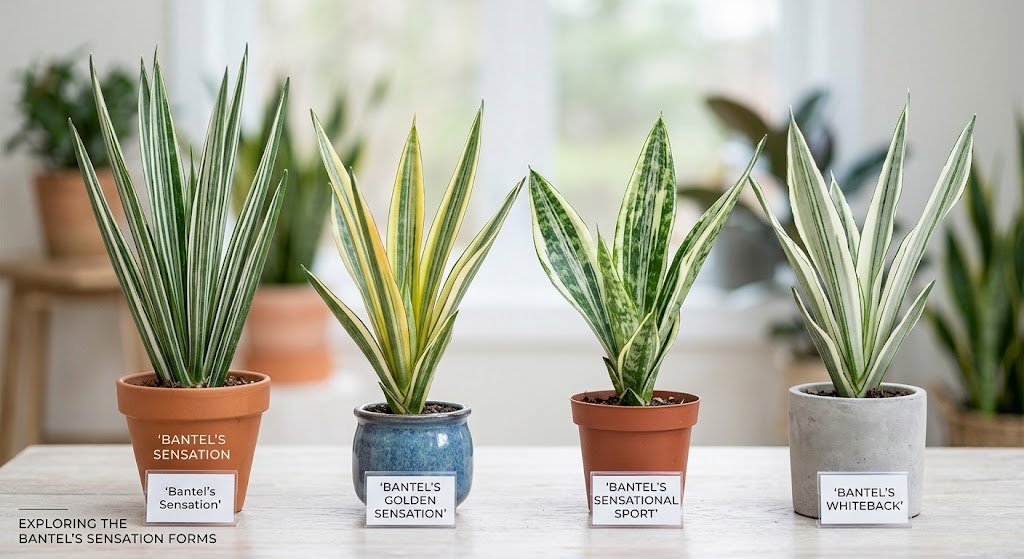
Sansevieria Bantel’s Sensation / White Snake Plant is known for its air-purifying quality and its tall, narrow, upright leaves decorated with distinctive white and silvery-green vertical stripes, giving the plant an elegant, almost architectural appearance. It is one of the most recognizable variegated snake plants.
Like other snake plants, it is drought-tolerant, low-maintenance, and well suited to indoor growing. It prefers bright, indirect light but it also can tolerate low-light conditions.
Botanical name / Scientific name of Sansevieria Bantel’s Sensation is Dracaena trifasciata ‘Bantel’s Sensation‘.
Sansevieria Bantel’s Sensation care:
- Light: Bright, indirect light is ideal for Sansevieria Bantels Sensation. It can tolerate lower light but may grow more slowly under low-light conditions.
- Watering: Allow the soil to dry out completely, then start watering it. Avoid overwatering, as it can cause root and leaf rot.
- Soil: Use a fast-draining, gritty soil mix suitable for succulents or cactus.
- Temperature: Sansevieria Bantels Sensation prefers warm conditions. Protect it from cold drafts and temperatures below about 10°C (50°F).
- Humidity: Normal indoor humidity is sufficient for it.
- Fertilizer: Feed lightly during the growing season with a diluted balanced fertilizer.
Is Sansevieria Bantel’s Sensation toxic to cats and dogs?
Yes. Sansevieria Bantels Sensation / White Snake Plant is toxic to cats and dogs and if swallowed.
Sansevieria Bantels Sensation contains saponins, which is a toxic compound and can irritate the digestive system of cats and dogs.
Possible symptoms: Vomiting, diarrhea, nausea, drooling, and loss of appetite may occur after ingestion.
If your cat or dog eats Sansevieria Bantels sensation: Contact your veterinarian, particularly if your cat develops symptoms or has eaten a significant amount of the plant.
Sansevieria Twisted Sister:
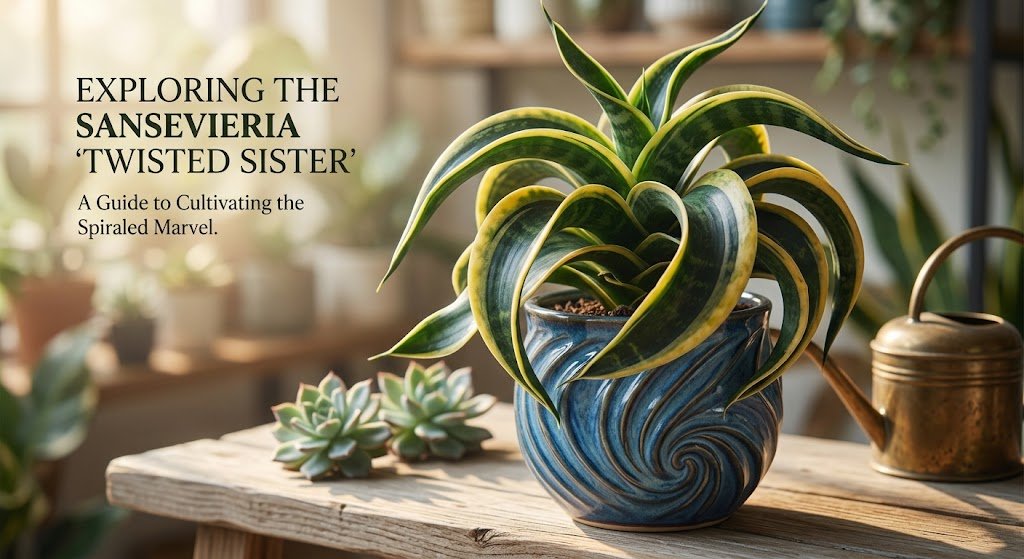
Sansevieria ‘Twisted Sister’ / Snake Plant Twisted Sister, is a distinctive snake plant cultivar known for its short, twisted and outward-curving leaves with attractive green banding and yellow-gold margins. It is a compact, slow-growing, drought-tolerant plant that is well suited to many indoor conditions. Its air-purifying quality and unusual twisted growth habit and colorful foliage make it especially popular among Sansevieria collectors.
Botanical name / Scientific name of Sansevieria Twisted Sister is Dracaena trifasciata ‘Twisted Sister‘.
Sansevieria Twisted Sister care:
- Light: Bright, indirect light is ideal for Sansevieria Twisted Sister. It can tolerate lower light but may grow more slowly under low-light conditions.
- Watering: Allow the soil to dry out completely, then start watering it. Avoid overwatering, as it can cause root and leaf rot.
- Soil: Use a fast-draining, gritty soil mix suitable for succulents or cactus.
- Temperature: Sansevieria Twisted Sister prefers warm conditions. Protect it from cold drafts and temperatures below about 10°C (50°F).
- Humidity: Normal indoor humidity is sufficient for it.
- Fertilizer: Feed lightly during the growing season with a diluted balanced fertilizer.
Is Sansevieria Twisted Sister toxic to cats and dogs?
Yes. Sansevieria Twisted Sister / Snake Plant Twisted Sister is toxic to cats and dogs and if swallowed.
Sansevieria Twisted Sister contains saponins, which is a toxic compound and can irritate the digestive system of cats and dogs.
Possible symptoms: Vomiting, diarrhea, nausea, drooling, and loss of appetite may occur after ingestion.
If your cat or dog eats Sansevieria Twisted Sister: Contact your veterinarian, particularly if your cat develops symptoms or has eaten a significant amount of the plant.
Sansevieria Cylindrica:
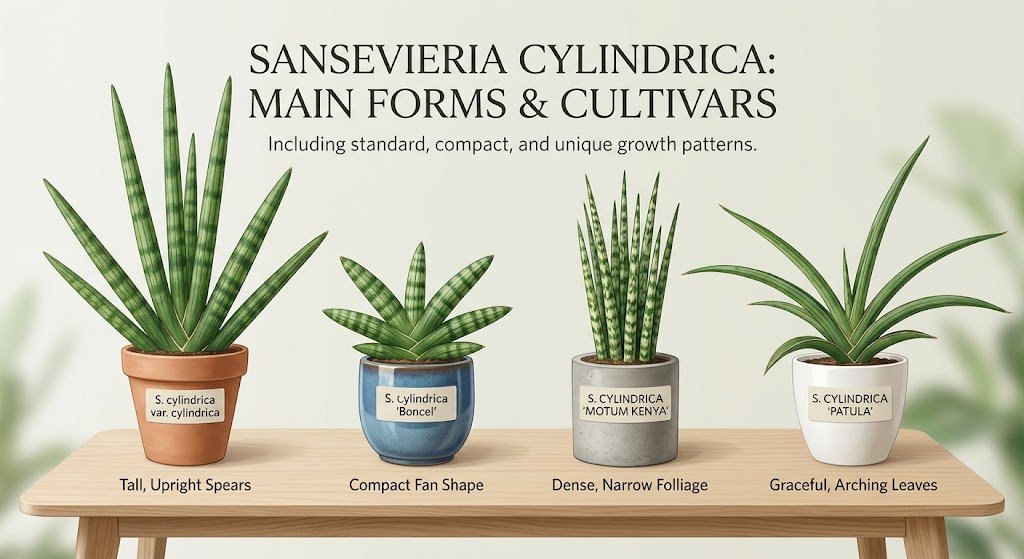
Sansevieria Cylindrica / Snake Plant Cylindrica is recognized by its air purifying quality and its long, upright, cylindrical, spear-like leaves with delicate green-gray banding. It is a very well-known Indoor plant / house plant, a drought-tolerant and low-maintenance succulent, it thrives in bright, indirect light and well-draining soil. Popular cultivated forms include ‘Boncel’ and ‘Motum Kenya’, making this species a favorite among snake plant collectors.
Botanical name / Scientific name of Sansevieria Cylindrica is Dracaena angolensis.
Sansevieria Cylindrica care:
- Light: Sansevieria Cylindrica grows well in low light but prefers bright, indirect light for healthy growth and better leaf coloring.
- Watering: Allow the soil to dry completely before watering again. Avoid frequent watering. Overwatering is one of the biggest risks and can lead to root rot.
- Soil: Use a loose, well-draining potting mix to prevent surplus moisture around the roots.
- Pot: Choose a pot with drainage holes so excess water can escape.
- Temperature: It prefers normal indoor temperatures and should be protected from extreme cold.
- Humidity: Sansevieria Cylindrica does not require high humidity and generally does well in average indoor humidity.
- Fertilizer: Feed lightly during the active growing season. Avoid excessive fertilizer
Is Sansevieria Cylindrica toxic to cats and dogs?
Yes. Sansevieria Cylindrica / Snake Plant Cylindrica is toxic to cats and dogs and if swallowed.
Sansevieria Cylindrica contains saponins, which is a toxic compound and can irritate the digestive system of cats and dogs.
Possible symptoms: Vomiting, diarrhea, nausea, drooling, and loss of appetite may occur after ingestion.
If your cat or dog eats Sansevieria Cylindrica: Contact your veterinarian, particularly if your cat develops symptoms or has eaten a significant amount of the plant.
Whale Fin Sansevieria:
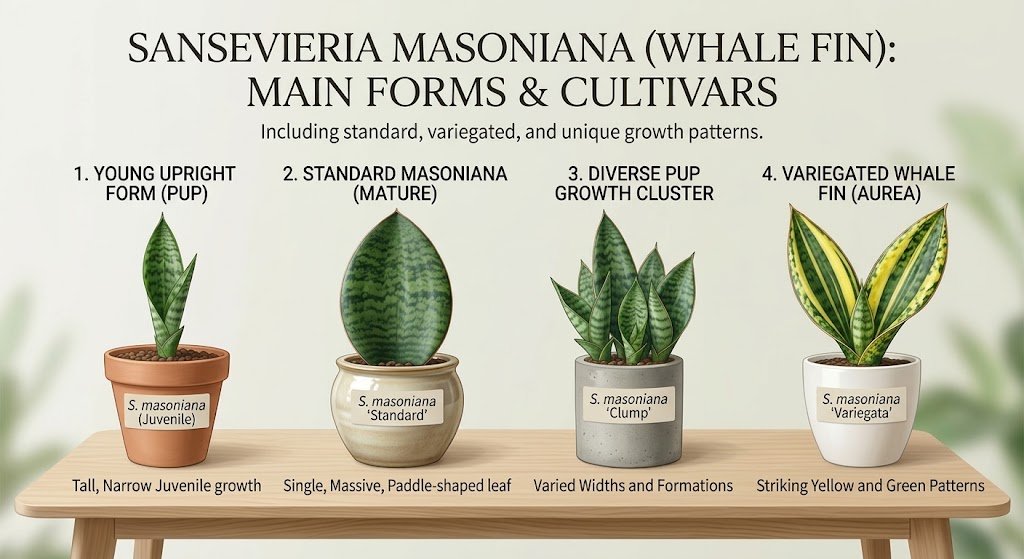
Whale Fin Snake Plant / Whale fin Sansevieria is a striking snake plant. It is named for its enormous, broad, paddle-shaped leaves, which resemble a whale’s fin. The leaves are dark green with attractive mottled or banded markings, and the plant typically produces only a few leaves, making each one a focal point. It is drought-tolerant, slow-growing, and relatively low-maintenance, preferring bright, indirect light, well-draining soil, and infrequent watering.
Botanical name / Scientific name of Whale Fin Snake Plant is Dracaena masoniana.
Whale Fin Snake Plant care:
- Light: Bright, indirect light is best. It can tolerate some lower light, but growth will be slower.
- Watering: Let the soil dry completely before watering. Reduce watering during winter. Overwatering is the biggest risk and can quickly lead to root rot.
- Soil: Use a very well-draining cactus or succulent mix.
- Temperature: Keep it warm, ideally 18–30°C (65–86°F). Protect it from frost and cold drafts.
- Humidity: Normal indoor humidity is sufficient.
- Fertilizer: Feed with a diluted balanced fertilizer every 1–2 months during the growing season.
- Pot: Use a pot with drainage holes; a relatively small pot is preferable.
Is Whale Fin Snake Plant toxic to cats and dogs?
Yes. Whale Fin Sansevieria / Whale Fin Snake Plant is toxic to cats and dogs and if swallowed.
Whale Fin Sansevieria contains saponins, which is a toxic compound and can irritate the digestive system of cats and dogs.
Possible symptoms: Vomiting, diarrhea, nausea, drooling, and loss of appetite may occur after ingestion.
If your cat or dog eats Whale Fin Sansevieria: Contact your veterinarian, particularly if your cat develops symptoms or has eaten a significant amount of the plant.
Sansevieria Samurai:
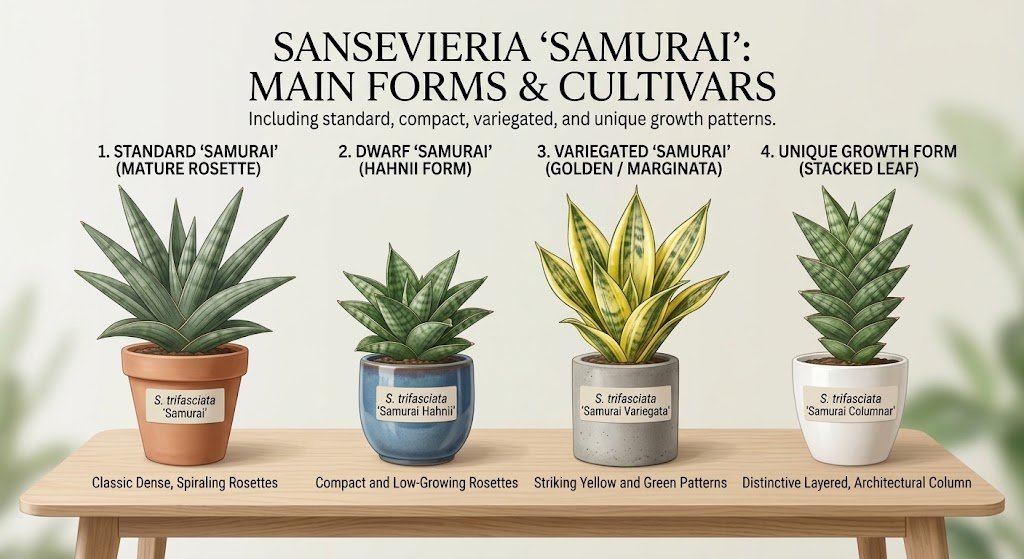
Sansevieria ‘Samurai’, commonly known as Samurai Dwarf, is a compact and distinctive snake plant associated with Sansevieria ehrenbergii (now classified as Dracaena hanningtonii). It is recognized by its short, thick, triangular leaves arranged in a tight, layered or fan-like form, often displaying green to silvery-green coloring with reddish-brown margins. A slow-growing, drought-tolerant succulent, it is well suited to indoor cultivation and is especially popular with Sansevieria collectors for its unusual compact form.
Sansevieria Samurai care:
- Light: Bright, indirect light is ideal. A few hours of gentle morning sun can also be beneficial.
- Watering: Allow the soil to dry completely before watering. Water sparingly, especially in winter. Overwatering is the biggest threat and can cause root and leaf rot.
- Soil: Use a very well-draining cactus or succulent mix.
- Temperature: Prefers warm conditions around 18–30°C (65–86°F). Protect it from frost and cold drafts.
- Humidity: Average household humidity is sufficient.
- Fertilizer: Apply a diluted, balanced fertilizer every 1–2 months during active growth.
- Pot: Use a small pot with good drainage holes, as excess soil can retain moisture around its roots.
- Growth: It is naturally slow-growing, so patience is important.
Is Sansevieria Samurai toxic to cats and dogs?
Yes. Sansevieria Samurai / Snake Plant Samurai is toxic to cats and dogs and if swallowed.
Sansevieria Samurai contains saponins, which is a toxic compound and can irritate the digestive system of cats and dogs.
Possible symptoms: Vomiting, diarrhea, nausea, drooling, and loss of appetite may occur after ingestion.
If your cat or dog eats Sansevieria Samurai: Contact your veterinarian, particularly if your cat develops symptoms or has eaten a significant amount of the plant.

One Comment