MONEY PLANT / POTHOS
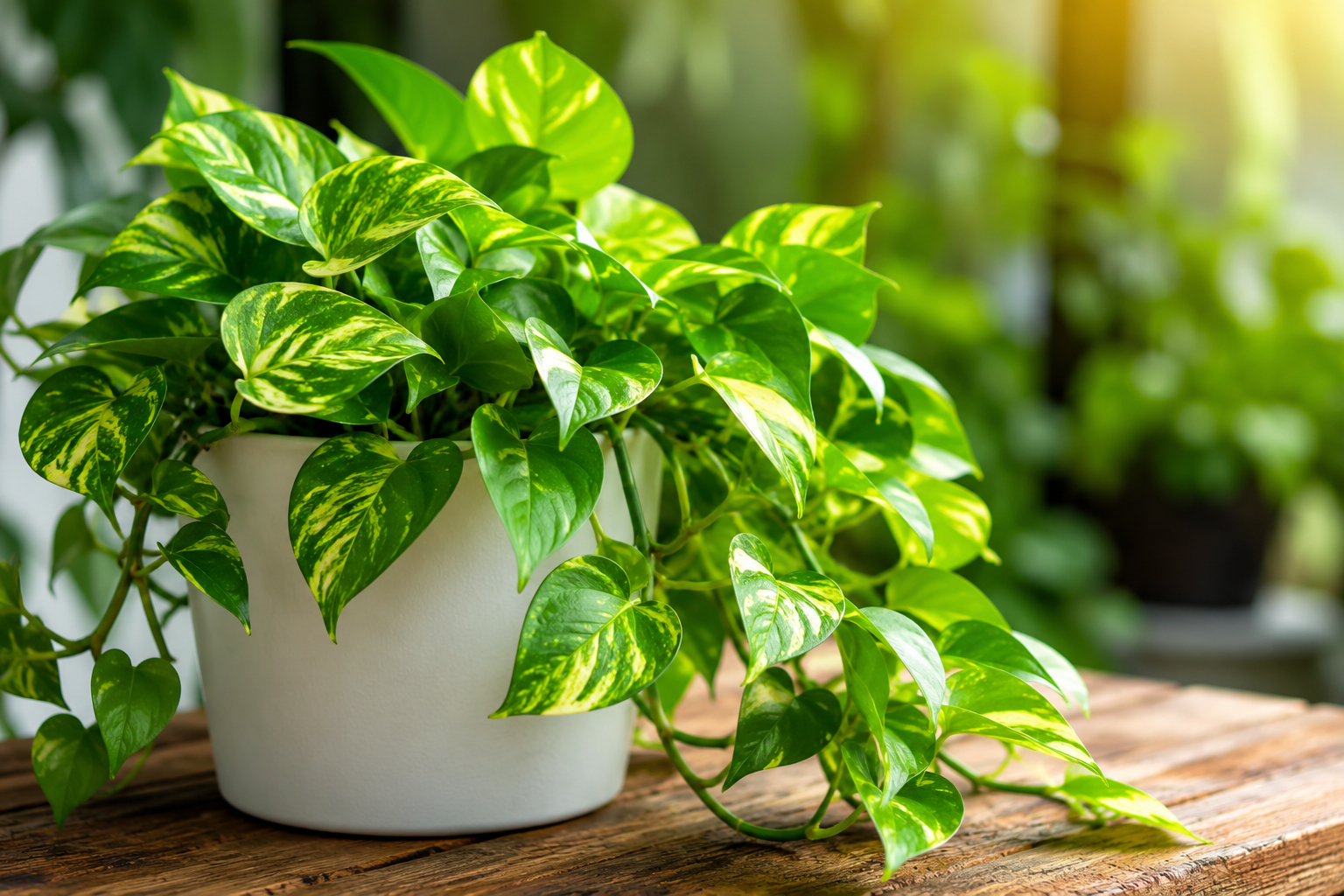
Money plant / Pothos plant is one of the most popular and easy to grow indoor plants / houseplants, it is being loved for its attractive green leaves and low maintenance nature. Its eye catching heart shaped leaves also make it a beautiful choice for adding a fresh and natural touch to indoor spaces. It is commonly grown in homes, offices, balconies and gardens because it can grow well in a variety of conditions and does not require complex care.
The name “money plant” is commonly associated with plants that are believed to symbolize wealth, prosperity, and good fortune.
Types of Money Plants / Pothos:
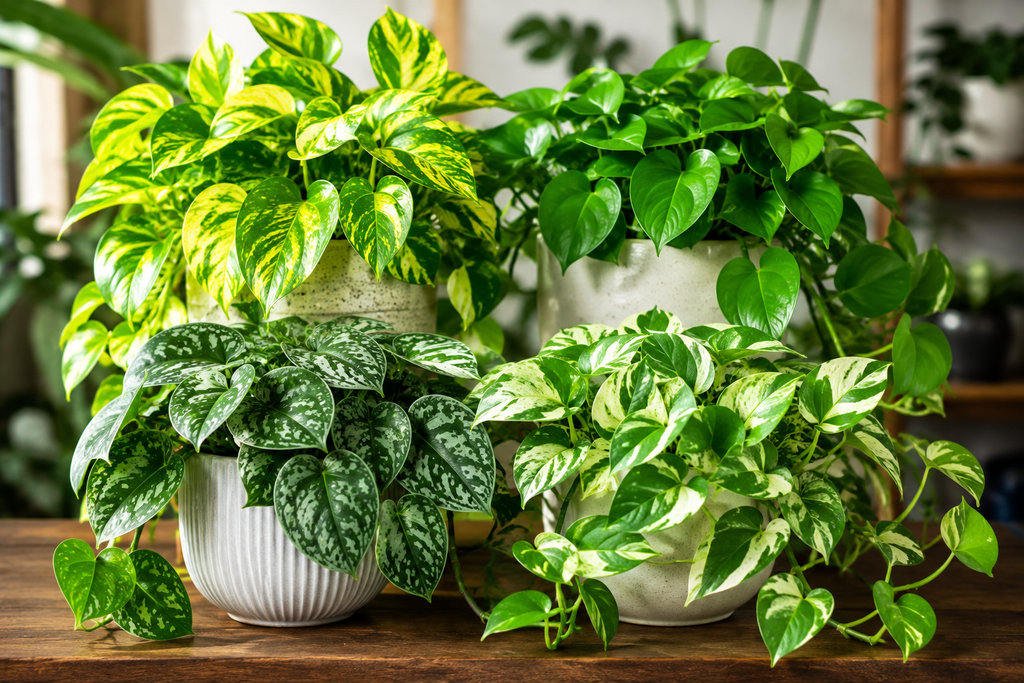
Pothos / Money plants are the most popular decorative Indoor plants known for their attractive foliage, easy care, and ability to grow indoors. Here are some types of money plant with their botanical names below:
- Golden Pothos (Epipremnum aureum).
- Marble Queen Pothos (Epipremnum aureum).
- Neon Pothos (Epipremnum aureum ‘neon’).
- Jade Pothos (Epipremnum aureum ‘Jade’).
- Manjula Pothos (Epipremnum aureum ‘Manjula’).
- Pearls and Jade Pothos (Epipremnum aureum ‘Pearls and Jade’)
- Cebu Blue Pothos (Epipremnum pinnatum ‘Cebu Blue’).
- Satin Pothos (Scindapsus pictus).
- Silver Pothos (Scindapsus pictus).
- Baltic Blue Pothos (Epipremnum pinnatum ‘Baltic Blue’).
- Global Green Pothos (Epipremnum aureum ‘Global Green’).
- Jessenia Pothos (Epipremnum aureum ‘Jessenia’).
- Chinese Money Plant (Pilea peperomioides).
- Money Tree (Pachira aquatica).
- Swiss Cheese Vine (Monstera adansonii).
1. Golden Pothos (Epipremnum aureum):
Golden Pothos is the most recognizable indoor plant in money plant varieties. It has and green heart shaped beautiful leaves, and have eye catching yellow or golden streaks and patches (known as variegated leaves).
It is easily adaptable and works well in hanging baskets, pots, and climbing arrangements.
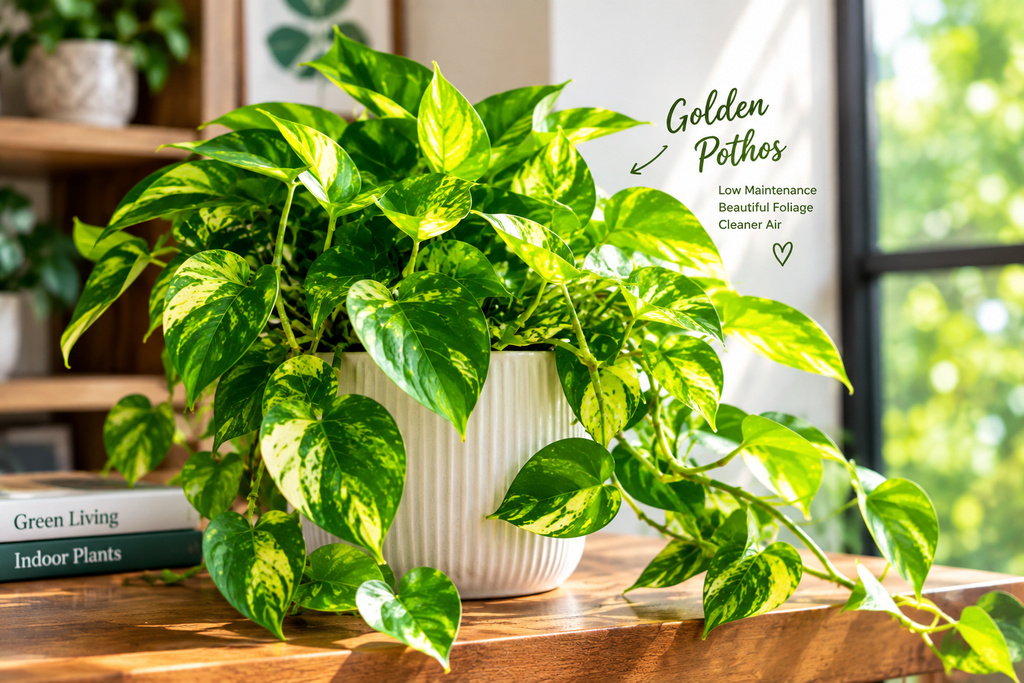
Golden Pothos care:
- Bright or Indirect light: Golden pothos grows finest in bright, indirect light. Place it near a window where it receives filtered sunlight in a good quantity.
It can bear low light conditions, but its growth may slow down and the golden variegation may become less visible. Avoid strong, direct afternoon sunlight, it can burn the leaves. - Watering: Check the top inch or two of soil with your finger, if it feels dry, it’s time to water your Golden Pothos plant.
Water carefully until extra water drains from the bottom of the pot, then empty any water sitting in the plate which is placed under the pot. Avoid keeping the soil constantly wet, as this can lead to rot the root. - Use Well-Draining Soil: For better drainage, you can mix in materials such as perlite or orchid bark.
Always use a pot which has drainage holes so extra water can escape. - Temperature: Golden Pothos loves normal indoor temperatures, ideal temperature for it is around 65–85°F (18–29°C). Protect it from cold drafts, frost, and sudden changes in temperature.
It also appreciates moderate humidity, although it generally adjusts well in typical household conditions. - Feed: Feed your Golden Pothos during the season of growth with a balanced, diluted houseplant fertilizer every few weeks or according to the fertilizer’s instructions.
Fertilizing Golden Pothos is not necessary during the plant’s slower growth periods. - Pruning: Regular pruning can help your Golden Pothos look filled and healthy. If the vines become too long or thin, trim them just above a leaf node using clean scissors.
You can also remove yellow, damaged, or dead leaves as needed. - Repotting: Golden pothos can stay in the same pot for quite a while, but it needs repotting when the roots become packed or start growing through the drainage holes.
When repotting, choose a pot only slightly larger than the current one and refresh the potting mixture.
Golden Pothos common problems:
- Yellow leaves: Often caused by overwatering, although naturally aging leaves can also turn yellow.
- Brown or crispy leaves: May indicate underwatering, very dry air, or too much direct sunlight.
- Loss of variegation: Usually happens when the plant isn’t receiving enough light.
- Drooping leaves: The plant may be thirsty, although overwatering and root problems can also cause drooping.
FAQ’s for Golden Pothos:
- Is Golden Pothos toxic to cats?
ANSWER: Yes, Golden Pothos is toxic to cats because it contains insoluble calcium oxalate crystals, which can annoy a cat’s mouth and digestive area if the plant is chewed or swallowed. Golden Pothos is also known as Devil’s Ivy.
Signs that your cat has chewed or swallowed a Golden Pothos:
* Drooling or excessive licking.
* Pawing at the mouth.
*Mouth, tongue, or lip irritation/swelling.
*Difficulty swallowing.
*Vomiting.
If you suspect your pet has eaten part of the plant, contact a veterinarian quickly. - Scientific name of Golden Pothos?
ANSWER: Scientific name of Golden Pothos is Epipremnum aureum.
2. Marble Queen Pothos (Epipremnum aureum):
Marble Queen Pothos is a popular and easy-care houseplant and valued for its beautiful green leaves covered with white and cream-colored marbling. Its prominent foliage makes it an outstanding decorative indoor plant.
Bright indoor spaces are best for Marble Queen Pothos because It grows very well in bright, indirect light and it helps to maintain its variegation.
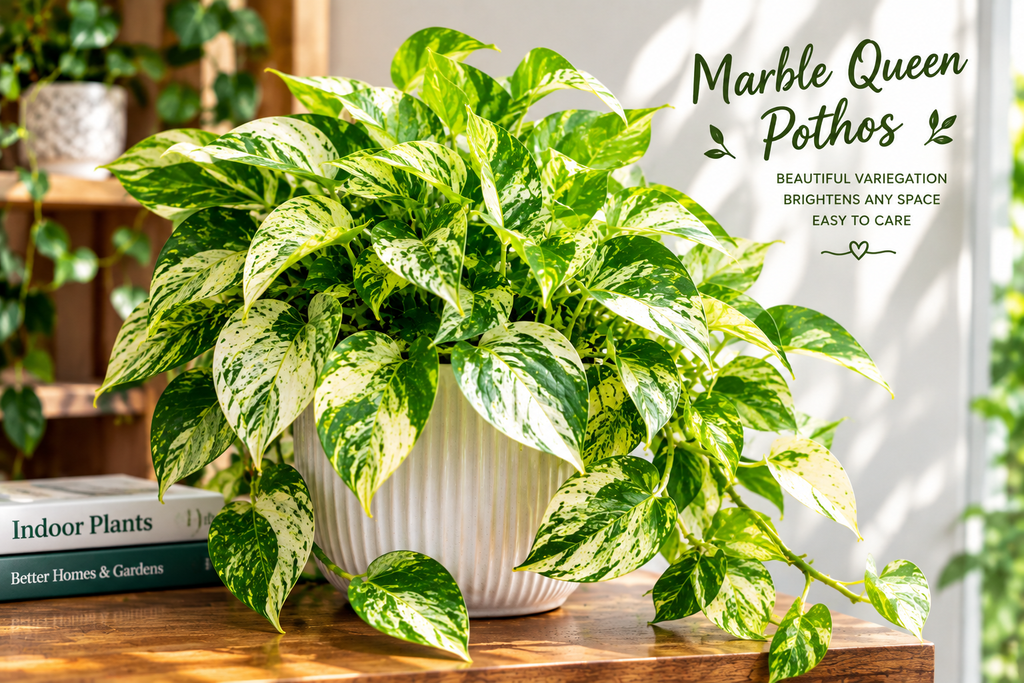
Marble Queen Pothos care:
- Light: Marble Queen pothos does best in bright, indirect light. Good lighting is especially important for maintaining its beautiful white-and-green variegation.
It can survive in lower light, but growth may become slower and the leaves may develop more green and less variegation. Avoid intense direct sunlight, particularly during the hottest part of the day, because it can scorch the leaves. - Watering: Marble Queen Pothos requires Water when the soil dries, let the top layer of the soil dry before watering again. The soil can be checked by inserting your finger about an inch into the pot.
When its watering time, water the plant thoroughly until some water drains from the bottom of the pot.
Do not overwater the Marble queen Pothos and do not leave any extra water in the plate which is placed under the pot, extra water in the plate makes the root sit in the water all the time and it rots the roots. - Use Well-Draining Soil: Marble Queen pothos prefers a loose, well-draining potting mix. A standard indoor potting mix amended with perlite and/or orchid bark can provide good drainage and airflow around the roots.
Always use a container with drainage holes. - Temperature: Marble Queen pothos loves typical indoor temperatures, ideally around 65–85°F (18–29°C).
The plant should not be placed near cold drafts, heaters, freezing temperature area and air-conditioning vents. It normally likes more humidity but it can settle in average household humidity. - Feed: You can feed your Marble Queen pothos with a balanced, diluted houseplant fertilizer every few weeks During the spring and summer according to the product’s instructions.
Do not over fertilize the plant as excessive fertilizer cause salt buildup in the soil and it damages the roots. - Pruning: Marble Queen pothos naturally develops long, trailing vines. If you want a fuller and bushier appearance, prune the vines regularly.
Cut just above a leaf node with a clean scissor. - Repotting: Marble Queen pothos may need repotting when roots begin growing out of the drainage holes, the soil dries unusually quickly, or the plant becomes noticeably root-bound.
The new pot should be slightly larger than the current pot. Refreshing the potting mix can also give the plant a fresh start.
Marble Queen Pothos common problems:
- Yellow leaves: Often caused by overwatering, although naturally aging leaves can also turn yellow.
- Brown or crispy leaves: May indicate underwatering, very dry air, or too much direct sunlight.
- Loss of variegation: Usually happens when the plant isn’t receiving enough light.
- Drooping leaves: The plant may needs water, although overwatering and root problems can also cause drooping.
- Slow growth: Marble Queen pothos can naturally grow more slowly than some greener pothos varieties because its highly variegated leaves contain less chlorophyll.
FAQ’s for Marble Queen Pothos:
- Is Marble Queen Pothos toxic to cats?
ANSWER: Yes, Marble Queen Pothos is toxic to cats because it contains insoluble calcium oxalate crystals, which can annoy a cat’s mouth and digestive area if the plant is chewed or swallowed.
Signs that your cat has chewed or swallowed a Marble Queen Pothos:
* Drooling or excessive licking.
* Pawing at the mouth.
*Mouth, tongue, or lip irritation/swelling.
*Difficulty swallowing.
*Vomiting.
If you suspect your pet has eaten part of the plant, contact a veterinarian quickly. - Scientific name of Marble Queen Pothos?
ANSWER: Scientific name of Marble Queen Pothos is Epipremnum aureum.